DCYF Intergovernmental Advisory Council
The Intergovernmental Advisory Council IAC) brings human services leaders and elected officials from counties and participating Tribal Nations together to advise the DCYF Commissioner on how Minnesota plans for, designs, administers, funds, and evaluates services for children, youth, and families.
Find here the IAC charter, bylaws, member information, meeting dates, work plan, recommendations, and annual reports.
The Intergovernmental Advisory Council IAC) brings human services leaders and elected officials from counties and participating Tribal Nations together to advise the DCYF Commissioner on how Minnesota plans for, designs, administers, funds, and evaluates services for children, youth, and families.
Find here the IAC charter, bylaws, member information, meeting dates, work plan, recommendations, and annual reports.
-
IAC Deepens Prevention Priority Setting at July 16 Virtual Meeting
Share IAC Deepens Prevention Priority Setting at July 16 Virtual Meeting on Facebook Share IAC Deepens Prevention Priority Setting at July 16 Virtual Meeting on X (formerly Twitter) Share IAC Deepens Prevention Priority Setting at July 16 Virtual Meeting on Linkedin Email IAC Deepens Prevention Priority Setting at July 16 Virtual Meeting linkThe DCYF Intergovernmental Advisory Council (IAC) convened on July 16 for a virtual meeting focused on ongoing prevention work, legislative updates, and statewide implementation planning for the Age of Delinquency policy change. Members, alternates, and partners from Tribal Nations, counties, and DCYF joined the discussion.
Continue readingThe DCYF Intergovernmental Advisory Council (IAC) convened on July 16 for a virtual meeting focused on ongoing prevention work, legislative updates, and statewide implementation planning for the Age of Delinquency policy change. Members, alternates, and partners from Tribal Nations, counties, and DCYF joined the discussion.
DCYF Legislative and Department Updates
DCYF Government Relations staff provided an overview of the 2026 legislative session and shared highlights form the department's proposal development cycle for 2027. Members discussed how the IAC can support early idea generation and partner engagement during summer and fall. DCYF noted that the IAC can serve as an additional structure, alongside existing Tribal Nation and county association engagement as the department prepares for prioritization later in the year.
IAC Prevention Breakout Discussions
The IAC completed two rounds of small-group breakout conversations to continue shaping the council’s prevention priorities. Members discussed themes across fiscal needs, policy and statute alignment, community-based prevention, workforce capacity, and cross-system integration.
Common themes included:
- The need for flexible, multi‑year funding aligned with local community priorities.
- Opportunities to better integrate prevention‑related funding streams and reduce barriers created by narrow eligibility requirements.
- Growing success of Family Resource Centers and Parent Support Outreach Program models in supporting families upstream.
- Ongoing challenges recruiting and retaining a prevention‑focused workforce across counties and Tribal Nations.
- The importance of simplifying cross‑system access for families and strengthening culturally grounded prevention approaches.
DCYF will share a summary of breakout insights along with a follow‑up survey to support refinement of prevention priority areas.
Age of Delinquency Implementation Update
Staff from Minnesota Management and Budget shared updates on the upcoming implementation of the new minimum delinquency age, which rises from 10 to 13 on August 1, 2026. Statewide workgroups continue to shape guidelines, service mapping, workforce training supports, and long‑term recommendations extending into 2027.
County representatives highlighted several considerations, including placement resource constraints, varying interpretations among county attorneys, and the absence of new funding to support anticipated shifts in caseloads. Members also discussed long‑term system needs and the potential formation of an IAC subcommittee to help align county and Tribal perspectives as implementation unfolds.
More information on the July 16 meeting of the IAC including presentation slides can be found in July 16 meeting materials.
-
Intergovernmental Advisory Council advances bylaws work and deepens prevention learning at May 21 meeting
Share Intergovernmental Advisory Council advances bylaws work and deepens prevention learning at May 21 meeting on Facebook Share Intergovernmental Advisory Council advances bylaws work and deepens prevention learning at May 21 meeting on X (formerly Twitter) Share Intergovernmental Advisory Council advances bylaws work and deepens prevention learning at May 21 meeting on Linkedin Email Intergovernmental Advisory Council advances bylaws work and deepens prevention learning at May 21 meeting linkThe Intergovernmental Advisory Council (IAC) met on May 21 in St. Paul, with members continuing foundational learning and early conversations on prevention.
Bylaws update
DCYF staff provided an update from the bylaws subcommittee and an overview of the latest draft.DCYF updates and discussion
DCYF staff shared updates on key initiatives, including the August 1 age‑of‑delinquency change, statewide child protection work, MAAFPCWDA implementation, and Minnesota’s zero‑error Title IV‑E review. Member questions prompted extended discussion about implementation challenges and system impacts.Prevention learning continues
Members heard presentations from the State–Tribal Child Welfare Partnership Committee and county partners on the AMC/MACSSAContinue readingThe Intergovernmental Advisory Council (IAC) met on May 21 in St. Paul, with members continuing foundational learning and early conversations on prevention.
Bylaws update
DCYF staff provided an update from the bylaws subcommittee and an overview of the latest draft.DCYF updates and discussion
DCYF staff shared updates on key initiatives, including the August 1 age‑of‑delinquency change, statewide child protection work, MAAFPCWDA implementation, and Minnesota’s zero‑error Title IV‑E review. Member questions prompted extended discussion about implementation challenges and system impacts.Prevention learning continues
Members heard presentations from the State–Tribal Child Welfare Partnership Committee and county partners on the AMC/MACSSA “Compliance to Transformation” white paper. These presentations generated substantial engagement, with discussion focusing on prevention definitions, culturally grounded approaches, and alignment across systems.Breakout session postponed
Due to the depth of discussion on presentation topics, the council did not have time to complete the planned prevention breakout session. Chairs noted it will be rescheduled to ensure full participation.Next steps
DCYF and IAC chairs will continue refining the bylaws draft, compile follow‑up items and revisit the prevention breakout work at a future meeting. The next IAC meeting will be held virtually on July 16.More information on the May 21 IAC meeting can be found at the link to presentation materials and agenda.
-
IAC Reviews Workplan Priorities, Continues Foundational Learning at April 29 Meeting
Share IAC Reviews Workplan Priorities, Continues Foundational Learning at April 29 Meeting on Facebook Share IAC Reviews Workplan Priorities, Continues Foundational Learning at April 29 Meeting on X (formerly Twitter) Share IAC Reviews Workplan Priorities, Continues Foundational Learning at April 29 Meeting on Linkedin Email IAC Reviews Workplan Priorities, Continues Foundational Learning at April 29 Meeting linkThe Intergovernmental Advisory Committee (IAC) convened virtually for their third meeting on April 29. Members from participating Tribal Nations, counties and DCYF continued building shared understanding across systems, strengthened relationships through dialogue and reflection, and advanced key components of the committees 2026 deliverables and workplan.
The meeting opened with a warm welcome to Mary Otto, DCYF’s new Executive Director of Tribal Relations, followed by member introductions grounded in the prompt, “What helps you feel connected to your team or community?” Themes included showing up in community, shared purpose, cultural traditions, relationship‑building, and supporting families and staff navigating complex systems.
The Intergovernmental Advisory Committee (IAC) convened virtually for their third meeting on April 29. Members from participating Tribal Nations, counties and DCYF continued building shared understanding across systems, strengthened relationships through dialogue and reflection, and advanced key components of the committees 2026 deliverables and workplan.
The meeting opened with a warm welcome to Mary Otto, DCYF’s new Executive Director of Tribal Relations, followed by member introductions grounded in the prompt, “What helps you feel connected to your team or community?” Themes included showing up in community, shared purpose, cultural traditions, relationship‑building, and supporting families and staff navigating complex systems.
The IAC Bylaws Subcommittee reported significant progress, with only a few sections remaining. A full draft is expected to be presented at the May meeting for member review and feedback. The bylaws are being designed as a clear operating guide for the IAC, with scheduled review cycles following adoption.
Committee chairs shared results from the recent workplan prioritization survey in which members identified priorities including sustainable and flexible funding, prevention services, modernization and technology, and baseline information needed for effective engagement to guide future agendas.
The meeting included a DCYF Foundational Overview, offering members a comprehensive look at operational areas and program divisions across the agency. DCYF leaders reported a high-level overview on Tribal and county relations, community engagement, strategic transformation work, finance and operations, the Office of Inspector General, and the program administrations supporting Child Safety, Family Well-Being, Early Childhood, and Youth Services. Members emphasized interest in further discussion on program integrity, prevention and funding structures.
Next Meeting
May 21, 2026
11:00 AM
MCIT, St. PaulMaterials
April 29 meeting slides -
January Meeting Held; Chairs Designated
Share January Meeting Held; Chairs Designated on Facebook Share January Meeting Held; Chairs Designated on X (formerly Twitter) Share January Meeting Held; Chairs Designated on Linkedin Email January Meeting Held; Chairs Designated linkThe DCYF Intergovernmental Advisory Committee (IAC) met on January 8 in St. Paul. Over 30 leaders representing Minnesota counties, DCYF and participating Tribal nations gathered to discuss implementation of the Whole Family Approach across the state and other topics to inform advice and recommendations to the DCYF Commissioner.
Following the meeting, participating Tribal nations met to designate an IAC co-chair. Anna Deschampe, Grand Portage Tribal Programs Administrator was selected to chair the IAC along with Linnea Mirsch, St. Louis County Deputy Administrator Community & Human Services (representing Counties), and Jennifer Sommerfeld, Government Relations Director (representing DCYF).
The IAC brings together counties, DCYF and participating Tribal nations to provide advice and recommendations to the DCYF Commissioner in regard to planning, design, administration, funding, and evaluation of services to children, youth, and families.
The DCYF Intergovernmental Advisory Committee (IAC) met on January 8 in St. Paul. Over 30 leaders representing Minnesota counties, DCYF and participating Tribal nations gathered to discuss implementation of the Whole Family Approach across the state and other topics to inform advice and recommendations to the DCYF Commissioner.
Following the meeting, participating Tribal nations met to designate an IAC co-chair. Anna Deschampe, Grand Portage Tribal Programs Administrator was selected to chair the IAC along with Linnea Mirsch, St. Louis County Deputy Administrator Community & Human Services (representing Counties), and Jennifer Sommerfeld, Government Relations Director (representing DCYF).
The IAC brings together counties, DCYF and participating Tribal nations to provide advice and recommendations to the DCYF Commissioner in regard to planning, design, administration, funding, and evaluation of services to children, youth, and families.
-
Additional Tribal Nation joins IAC
Share Additional Tribal Nation joins IAC on Facebook Share Additional Tribal Nation joins IAC on X (formerly Twitter) Share Additional Tribal Nation joins IAC on Linkedin Email Additional Tribal Nation joins IAC linkShakopee Mdewakanton Sioux Community has signed onto a charter with the Department of Children, Youth, and Families (DCYF) to join Fond du Lac Band of Lake Superior Chippewa, Grand Portage Band of Lake Superior Chippewa, Leech Lake Band of Ojibwe, Mille Lacs Band of Ojibwe, White Earth Nation, Association of Minnesota Counties (AMC), and Minnesota Association of County Social Services Administrators (MACSSA) to participate in the DCYF Intergovernmental Advisory Committee (IAC).
The IAC provides advice and recommendations to the DCYF Commissioner about services for Minnesota children, youth, and families.
Shakopee Mdewakanton Sioux Community has signed onto a charter with the Department of Children, Youth, and Families (DCYF) to join Fond du Lac Band of Lake Superior Chippewa, Grand Portage Band of Lake Superior Chippewa, Leech Lake Band of Ojibwe, Mille Lacs Band of Ojibwe, White Earth Nation, Association of Minnesota Counties (AMC), and Minnesota Association of County Social Services Administrators (MACSSA) to participate in the DCYF Intergovernmental Advisory Committee (IAC).
The IAC provides advice and recommendations to the DCYF Commissioner about services for Minnesota children, youth, and families.
-
DCYF IAC Inaugural Meeting Held
Share DCYF IAC Inaugural Meeting Held on Facebook Share DCYF IAC Inaugural Meeting Held on X (formerly Twitter) Share DCYF IAC Inaugural Meeting Held on Linkedin Email DCYF IAC Inaugural Meeting Held link
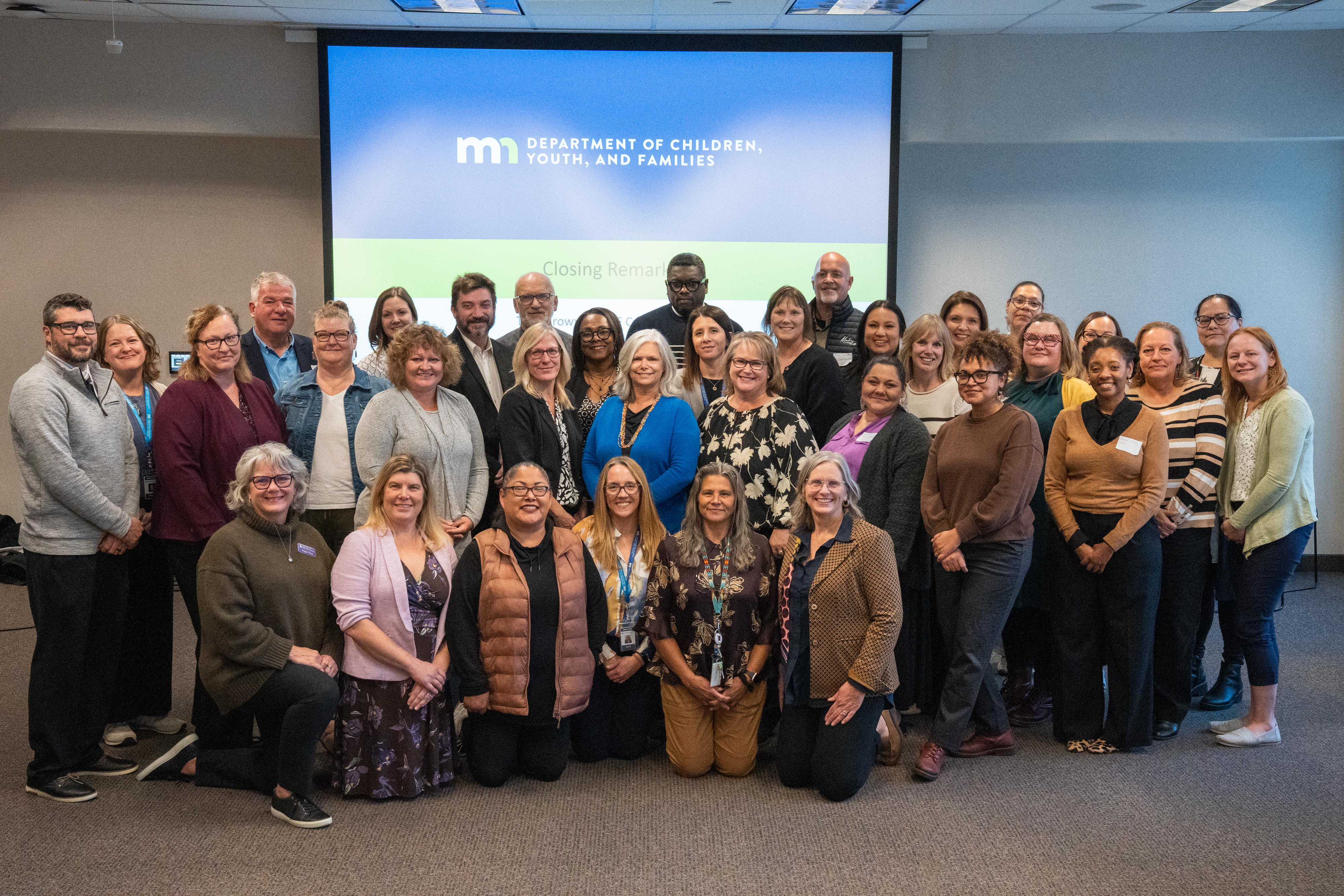
The inaugural meeting of the DCYF Intergovernmental Advisory Committee (IAC) was held on November 6 in St. Paul. Leaders from across the State representing the State of Minnesota Children's Cabinet and Department of Children, Youth and Families; elected officials and human services leaders appointed by the Association of Minnesota Counties (AMC), and the Minnesota Association of County Social Services Administrators (MACSSA); and leaders representing five participating Tribal Nations: Fond du Lac Band of Lake Superior Chippewa, Grand Portage Band of Lake Superior Chippewa, Leech Lake Band of Ojibwe, Mille Lacs Band of Ojibwe, and White Earth Nation gather following closing remarks from DCYF Commissioner Tikki Brown.
-
Additional Tribal Nations join the IAC
Share Additional Tribal Nations join the IAC on Facebook Share Additional Tribal Nations join the IAC on X (formerly Twitter) Share Additional Tribal Nations join the IAC on Linkedin Email Additional Tribal Nations join the IAC linkGrand Portage Band of Lake Superior Chippewa and Mille Lacs Band of Ojibwe have signed onto a charter with the Department of Children, Youth, and Families (DCYF) to join Fond du Lac Band of Lake Superior Chippewa, Leech Lake Band of Ojibwe, White Earth Nation, Association of Minnesota Counties (AMC), and Minnesota Association of County Social Services Administrators (MACSSA) to participate in the DCYF Intergovernmental Advisory Committee (IAC).
The IAC provides advice and recommendations to the DCYF Commissioner about services for Minnesota children, youth, and families.
Grand Portage Band of Lake Superior Chippewa and Mille Lacs Band of Ojibwe have signed onto a charter with the Department of Children, Youth, and Families (DCYF) to join Fond du Lac Band of Lake Superior Chippewa, Leech Lake Band of Ojibwe, White Earth Nation, Association of Minnesota Counties (AMC), and Minnesota Association of County Social Services Administrators (MACSSA) to participate in the DCYF Intergovernmental Advisory Committee (IAC).
The IAC provides advice and recommendations to the DCYF Commissioner about services for Minnesota children, youth, and families.
-
First meeting of the IAC scheduled for November 6
Share First meeting of the IAC scheduled for November 6 on Facebook Share First meeting of the IAC scheduled for November 6 on X (formerly Twitter) Share First meeting of the IAC scheduled for November 6 on Linkedin Email First meeting of the IAC scheduled for November 6 linkThe initial meeting of the DCYF Intergovernmental Advisory Council (IAC) will be held on Thursday, November 6 from 12:30 PM - 4:00 PM at Minnesota Counties Intergovernmental Trust (MCIT) building in St. Paul. The meeting details are still under development, but are expected to focus on relationship development; grounding in the IAC charter, logistics, and the DCYF strategic plan; and beginning to gather perspective about what subject areas the IAC should focus on in its first year.
The IAC brings human services leaders and elected officials from counties and participating Tribal Nations together to advise the DCYF Commissioner on howContinue reading
The initial meeting of the DCYF Intergovernmental Advisory Council (IAC) will be held on Thursday, November 6 from 12:30 PM - 4:00 PM at Minnesota Counties Intergovernmental Trust (MCIT) building in St. Paul. The meeting details are still under development, but are expected to focus on relationship development; grounding in the IAC charter, logistics, and the DCYF strategic plan; and beginning to gather perspective about what subject areas the IAC should focus on in its first year.
The IAC brings human services leaders and elected officials from counties and participating Tribal Nations together to advise the DCYF Commissioner on how Minnesota plans for, designs, administers, funds, and evaluates services for children, youth, and families. The IAC was co-developed among DCYF, interested Tribal Nations, the Association of Minnesota Counties, and the Minnesota Association of County Social Services Administrators.
The IAC aims to maximize the value of public investments in the administration of DCYF services, in the form of positive outcomes for people and communities served, through effective partnerships among DCYF, Tribal Nations, and counties.
-
DCYF IAC established with three Tribal Nations and two county associations; additional Tribal Nations interested
Share DCYF IAC established with three Tribal Nations and two county associations; additional Tribal Nations interested on Facebook Share DCYF IAC established with three Tribal Nations and two county associations; additional Tribal Nations interested on X (formerly Twitter) Share DCYF IAC established with three Tribal Nations and two county associations; additional Tribal Nations interested on Linkedin Email DCYF IAC established with three Tribal Nations and two county associations; additional Tribal Nations interested linkFond du Lac Band, Leech Lake Band, White Earth Nation, Association MN Counties (AMC), and MN Association of County Social Services Administrators (MACSSA) signed onto a charter with DCYF to establish an Intergovernmental Advisory Committee (IAC) to advise the Commissioner on the planning, design, administration, funding, and evaluation of services to Minnesota's children, youth, and families. DCYF is preparing for the inaugural IAC meeting to be scheduled in late October or early November, where the group will begin to establish its operating bylaws and develop a plan of subject areas to focus on in the coming year.
The Minnesota Association of County Social Services Administrators (MACSSA) adopted the DCYF IAC charter on August 21, 2025; and White Earth Nation adopted the charter on August 29, 2025. Leech Lake Band of Ojibwe Tribal Council and Fond du Lac Band of Lake Superior Chippewa Reservation Business Committee adopted the charter on September 2, 2025, and September 9, 2025, respectively. The Association of Minnesota Counties (AMC) adopted the charter on September 10, 2025. Three additional Tribal Nations have informed DCYF that they are moving through an approval process.
IAC is comprised of 1 representative from each participating Tribal Nation, 4 to 6 from DCYF, 2 to 5 from AMC, and up to 11 from MACSSA. Tribal Nations may choose to participate or withdraw from the IAC at any time.
Fond du Lac Band, Leech Lake Band, White Earth Nation, Association MN Counties (AMC), and MN Association of County Social Services Administrators (MACSSA) signed onto a charter with DCYF to establish an Intergovernmental Advisory Committee (IAC) to advise the Commissioner on the planning, design, administration, funding, and evaluation of services to Minnesota's children, youth, and families. DCYF is preparing for the inaugural IAC meeting to be scheduled in late October or early November, where the group will begin to establish its operating bylaws and develop a plan of subject areas to focus on in the coming year.
The Minnesota Association of County Social Services Administrators (MACSSA) adopted the DCYF IAC charter on August 21, 2025; and White Earth Nation adopted the charter on August 29, 2025. Leech Lake Band of Ojibwe Tribal Council and Fond du Lac Band of Lake Superior Chippewa Reservation Business Committee adopted the charter on September 2, 2025, and September 9, 2025, respectively. The Association of Minnesota Counties (AMC) adopted the charter on September 10, 2025. Three additional Tribal Nations have informed DCYF that they are moving through an approval process.
IAC is comprised of 1 representative from each participating Tribal Nation, 4 to 6 from DCYF, 2 to 5 from AMC, and up to 11 from MACSSA. Tribal Nations may choose to participate or withdraw from the IAC at any time.
-
DCYF hires IAC coordinator
Share DCYF hires IAC coordinator on Facebook Share DCYF hires IAC coordinator on X (formerly Twitter) Share DCYF hires IAC coordinator on Linkedin Email DCYF hires IAC coordinator linkDCYF is pleased to announce that Alison McIntyre has accepted the position of Intergovernmental Relations Coordinator. She will join DCYF on September 24.
As the Intergovernmental Relations Coordinator, Alison will provide administrative and programmatic support for the new, statutorily required Intergovernmental Advisory Committee (IAC). She will provide day to day coordination of advisory committee functions, including drafting and executing work plans, managing the flow of information between the IAC and DCYF areas, developing and providing recommendations from the IAC to the Commissioner, among many other things.
Alison brings more than a decade of experience in leadership roles andContinue reading
DCYF is pleased to announce that Alison McIntyre has accepted the position of Intergovernmental Relations Coordinator. She will join DCYF on September 24.
As the Intergovernmental Relations Coordinator, Alison will provide administrative and programmatic support for the new, statutorily required Intergovernmental Advisory Committee (IAC). She will provide day to day coordination of advisory committee functions, including drafting and executing work plans, managing the flow of information between the IAC and DCYF areas, developing and providing recommendations from the IAC to the Commissioner, among many other things.
Alison brings more than a decade of experience in leadership roles and direct service in public health and human services. Most recently, she served for 8 years as the Public Health and Human Services Director for Cook County, MN. As the agency director, she worked closely with area Tribal leaders and human services staff and also managed the administration and activities of two citizen advisory boards, fostering partnerships with community members and service providers to address complex challenges. Alison holds a Master of Public Affairs degree from the University of Minnesota’s Humphrey School of Public Affairs, specializing in human services leadership and human-centered redesign. She also holds a Bachelor of Arts degree in English and Environmental Studies from St. Olaf College and is trained as a Restorative Justice Circle Keeper.
-
Intergovernmental Relations Coordinator
Phone 651-539-8195 Email alison.mcintyre@state.mn.us -
Transition Director | DCYF County Relations

Phone 651-539-8174 Email jane.hardwick@state.mn.us

-
2026 July 16
-
2026 May 21
-
Prevention Resources (May 2026)
-
DCYF Child Safety and Permanency Strategic Plan Overview
-
DCYF Child Welfare Programs Overview (118 KB) (pdf)
-
MinnesotaSFY2022_ChildTrends_July2025.pdf (912 KB) (pdf)
-
CY2025 Human Services Allocations Summary (416 KB) (pdf)
-
Minnesota African American Family Preservation and Child Welfare Disproportionality Act Evaluation Report
-
Chapin Hall Policy Brief Economic-and-Concrete-Supports to Support Child Family Well-Being 2021-07.pdf (6.25 MB) (pdf)
-
-
2026 April 29
-
2026 January 08
-
January 08 2026 IAC Meeting Agenda (111 KB) (pdf)
-
2025 11-06 IAC Meeting Notes.pdf (197 KB) (pdf)
-
November 6 IAC workplan input notes
-
DCYF IAC Charter as of January 5 2026
-
DCYF IAC Membership listing
-
Whole Family Approach handout Six Key Components of Family Well-Being
-
2026 01-08 IAC Meeting Presentation Slides (3.72 MB) (pdf)
-
2026 01.08 IAC Meeting Notes DRAFT.pdf (227 KB) (pdf)
-
2026 01.08 IAC WFA and Workplan Development Results (280 KB) (pdf)
-
-
2025 November 06
-
November 6 2025 IAC Meeting Agenda
-
2025 11-06 IAC Meeting Notes (197 KB) (pdf)
-
2025 11.06 IAC Workplan Development Brainstorm Results.pdf (439 KB) (pdf)
-
IAC Inaugural Meeting Presentation Slides
-
DCYF Strategic Plan
-
DCYF IAC Charter (effective 11.5.2025)
-
IAC Members (effective 11.5.2025)
-
DCYF Photo Release Form
-
-
Bylaws Subcommittee
-
2026 04-07 10 am Bylaws Draft for 04-10 Subcommittee.pdf (281 KB) (pdf)
-
2026 04 10 DCYF IAC Bylaws Subcommittee Meeting Agenda.pdf (208 KB) (pdf)
-
2026 03 24 DCYF IAC Bylaws Subcommittee Meeting Notes.pdf (197 KB) (pdf)
-
2026 03 24 DCYF IAC Bylaws Subcommittee Agenda.pdf (212 KB) (pdf)
-
2026 02 26 DCYF IAC Bylaws Subcommittee Notes (301 KB) (pdf)
-
2026 02 26 DCYF IAC Bylaws Subcommittee Agenda (289 KB) (pdf)
-
-
General FAQs
- How is the IAC different from the DCYF Implementation Intergovernmental Advisory Group that has already been in place?
- Why has an IAC been established for DCYF?
- What happens if a Tribal Nation isn’t interested in participating now, but later wants to?
- How does the IAC interact with existing advisory committees, tasks forces, and similar groups?
- Specifically, how will the IAC impact the American Indian Child Welfare Advisory Council (AICWAC)?
- Is the IAC like or based on the MN Department of Health’s SCHSAC (State Community Health Services Advisory Committee)?
- How does the IAC interact with the DCYF Commissioner’s requirement to consult with Tribal leaders under MN Statutes 10.65?
- Tribes are sovereign nations. Why would they be at the same table as county governments –which are creations of the State of MN—in advising on and discussing DCYF matters?
- How do open meeting laws apply to the IAC?
- How does the work of the IAC get implemented at the local level and how are the members responsible for disseminating information?
- Who do I contact with questions or input?


