ECFE Professional Community Engagement
Share ECFE Professional Community Engagement on Facebook Share ECFE Professional Community Engagement on Twitter Share ECFE Professional Community Engagement on Linkedin Email ECFE Professional Community Engagement link
ECFE logo

The ECFE Professional Community Engagement Page

This is your central online space to stay connected with Minnesota’s ECFE network. Here, you’ll find official updates from the DCYF ECFE team and spaces to connect with peers, share ideas, and learn from one another.


Official Communication
Find key announcements, updates, and opportunities from the DCYF ECFE team in one place.

Peer Networking
Join discussions with ECFE professionals across the state on topics like lesson planning, classroom environments, and parenting research.

Please register with your school email to participate.

Questions? Contact: ecfe.dcyf@state.mn.us

The ECFE Professional Community Engagement Page

This is your central online space to stay connected with Minnesota’s ECFE network. Here, you’ll find official updates from the DCYF ECFE team and spaces to connect with peers, share ideas, and learn from one another.


Official Communication
Find key announcements, updates, and opportunities from the DCYF ECFE team in one place.

Peer Networking
Join discussions with ECFE professionals across the state on topics like lesson planning, classroom environments, and parenting research.

Please register with your school email to participate.

Questions? Contact: ecfe.dcyf@state.mn.us

  • Summary: OOH: Planning ECFE Classes Summary

    Share Summary: OOH: Planning ECFE Classes Summary on Facebook Share Summary: OOH: Planning ECFE Classes Summary on Twitter Share Summary: OOH: Planning ECFE Classes Summary on Linkedin Email Summary: OOH: Planning ECFE Classes Summary link

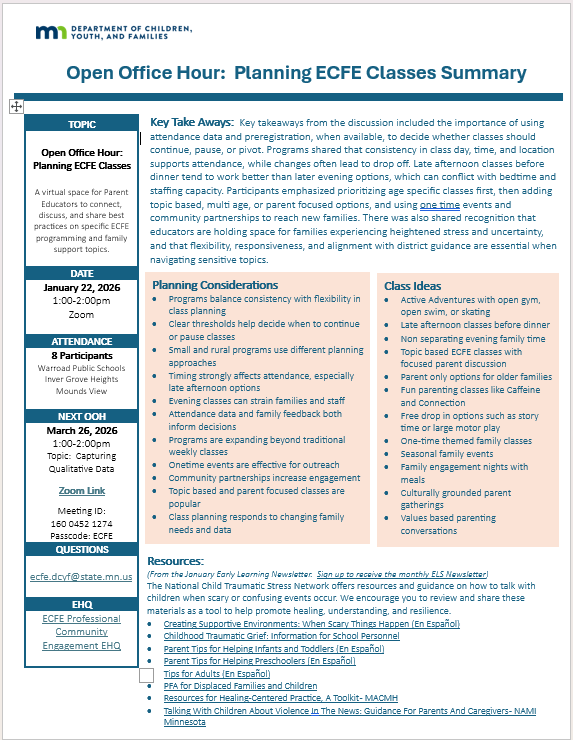
    Open Office Hour: Planning ECFE Classes Summary

    Date: January 22, 2026 (1:00-2:00pm)

    Audience: ECFE EducatorsPDF version of the summary

    Key Take Aways: Key takeaways from the discussion included the importance of using attendance data and preregistration, when available, to decide whether classes should continue, pause, or pivot. Programs shared that consistency in class day, time, and location supports attendance, while changes often lead to drop off. Late afternoon classes before dinner tend to work better than later evening options, which can conflict with bedtime and staffing capacity. Participants emphasized prioritizing age specific classes first, then adding topic based, multi age, or parent focused options, and using one time events and community partnerships to reach new families. There was also shared recognition that educators are holding space for families experiencing heightened stress and uncertainty, and that flexibility, responsiveness, and alignment with district guidance are essential when navigating sensitive topics.

    Planning Considerations

    • Programs balance consistency with flexibility in class planning
    • Clear thresholds help decide when to continue or pause classes
    • Small and rural programs use different planning approaches
    • Timing strongly affects attendance, especially late afternoon options
    • Evening classes can strain families and staff
    • Attendance data and family feedback both inform decisions
    • Programs are expanding beyond traditional weekly classes
    • Onetime events are effective for outreach
    • Community partnerships increase engagement
    • Topic based and parent focused classes are popular
    • Class planning responds to changing family needs and data

    Class Ideas

    • Active Adventures with open gym, open swim, or skating
    • Late afternoon classes before dinner
    • Non separating evening family time
    • Topic based ECFE classes with focused parent discussion
    • Parent only options for older families
    • Fun parenting classes like Caffeine and Connection
    • Free drop in options such as story time or large motor play
    • One-time themed family classes
    • Seasonal family events
    • Family engagement nights with meals
    • Culturally grounded parent gatherings
    • Values based parenting conversations

    Open Office Hour: Planning ECFE Classes Summary

    Date: January 22, 2026 (1:00-2:00pm)

    Audience: ECFE EducatorsPDF version of the summary

    Key Take Aways: Key takeaways from the discussion included the importance of using attendance data and preregistration, when available, to decide whether classes should continue, pause, or pivot. Programs shared that consistency in class day, time, and location supports attendance, while changes often lead to drop off. Late afternoon classes before dinner tend to work better than later evening options, which can conflict with bedtime and staffing capacity. Participants emphasized prioritizing age specific classes first, then adding topic based, multi age, or parent focused options, and using one time events and community partnerships to reach new families. There was also shared recognition that educators are holding space for families experiencing heightened stress and uncertainty, and that flexibility, responsiveness, and alignment with district guidance are essential when navigating sensitive topics.

    Planning Considerations

    • Programs balance consistency with flexibility in class planning
    • Clear thresholds help decide when to continue or pause classes
    • Small and rural programs use different planning approaches
    • Timing strongly affects attendance, especially late afternoon options
    • Evening classes can strain families and staff
    • Attendance data and family feedback both inform decisions
    • Programs are expanding beyond traditional weekly classes
    • Onetime events are effective for outreach
    • Community partnerships increase engagement
    • Topic based and parent focused classes are popular
    • Class planning responds to changing family needs and data

    Class Ideas

    • Active Adventures with open gym, open swim, or skating
    • Late afternoon classes before dinner
    • Non separating evening family time
    • Topic based ECFE classes with focused parent discussion
    • Parent only options for older families
    • Fun parenting classes like Caffeine and Connection
    • Free drop in options such as story time or large motor play
    • One-time themed family classes
    • Seasonal family events
    • Family engagement nights with meals
    • Culturally grounded parent gatherings
    • Values based parenting conversations
  • Winter Updates from DCYF ECFE

    Share Winter Updates from DCYF ECFE on Facebook Share Winter Updates from DCYF ECFE on Twitter Share Winter Updates from DCYF ECFE on Linkedin Email Winter Updates from DCYF ECFE link

    ECFE Winter Updates 2026

    Click on the slide deck to review current ECFE updates, resources, and upcoming opportunities. The slides highlight key reminders and learning opportunities, including the ECFE Professional Community Engagement page, discussion forums, the ECFE Marketing Toolkit, MN Story Collective story gathering, Communities of Practice, open office hours, technical assistance sessions, and partner updates. We encourage you to explore the sections most relevant to your role and continue using this space to stay connected, informed, and supported in your work with families across Minnesota.
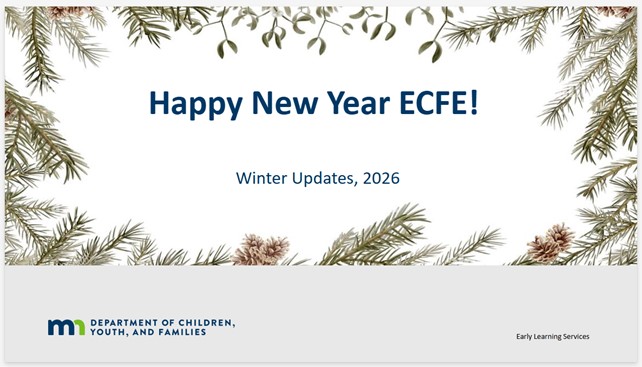
    ECFE Winter Updates slideshow


    ECFE Winter Updates 2026

    Click on the slide deck to review current ECFE updates, resources, and upcoming opportunities. The slides highlight key reminders and learning opportunities, including the ECFE Professional Community Engagement page, discussion forums, the ECFE Marketing Toolkit, MN Story Collective story gathering, Communities of Practice, open office hours, technical assistance sessions, and partner updates. We encourage you to explore the sections most relevant to your role and continue using this space to stay connected, informed, and supported in your work with families across Minnesota.

    ECFE Winter Updates slideshow


  • ECFE Marketing Toolkit PDF Now Available
    Share ECFE Marketing Toolkit PDF Now Available on Facebook Share ECFE Marketing Toolkit PDF Now Available on Twitter Share ECFE Marketing Toolkit PDF Now Available on Linkedin Email ECFE Marketing Toolkit PDF Now Available link

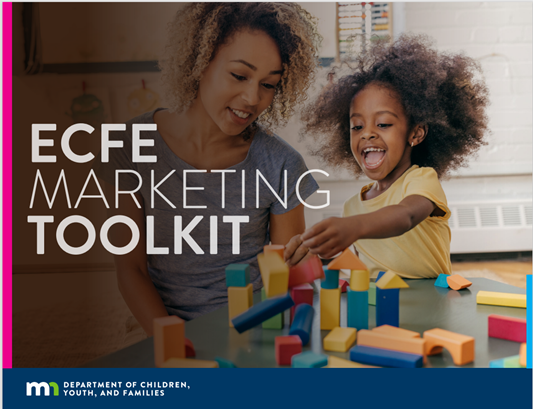
    ECFE Marketing Toolkit PDF Now AvailableCover of the marketing toolkit PDF, featuring a mom and preschooler building with blocks

    We are excited to share that the ECFE Marketing Toolkit PDF is now finalized and available on the DCYF website.

    The toolkit brings together ready to use outreach materials designed to support inclusive and culturally responsive engagement with families across Minnesota.

    It includes guidance and customizable assets to help programs strengthen awareness of ECFE and connect with families in meaningful ways.

    You can access the full ECFE Marketing Toolkit PDF here:
    https://dcyf.mn.gov/partners-and-providers/child-care-and-early-learning/districts-schools-and-head-start/ECFE/marketing-toolkit.

    We encourage you to explore the toolkit and begin using the materials in ways that best fit your community. More support and learning opportunities will continue to be shared through this space.

    Thank you for all you do to support families and children across the state.

    ECFE Marketing Toolkit PDF Now AvailableCover of the marketing toolkit PDF, featuring a mom and preschooler building with blocks

    We are excited to share that the ECFE Marketing Toolkit PDF is now finalized and available on the DCYF website.

    The toolkit brings together ready to use outreach materials designed to support inclusive and culturally responsive engagement with families across Minnesota.

    It includes guidance and customizable assets to help programs strengthen awareness of ECFE and connect with families in meaningful ways.

    You can access the full ECFE Marketing Toolkit PDF here:
    https://dcyf.mn.gov/partners-and-providers/child-care-and-early-learning/districts-schools-and-head-start/ECFE/marketing-toolkit.

    We encourage you to explore the toolkit and begin using the materials in ways that best fit your community. More support and learning opportunities will continue to be shared through this space.

    Thank you for all you do to support families and children across the state.

  • Summary: TA: ECFE MN Story Collective Initiative

    Share Summary: TA: ECFE MN Story Collective Initiative on Facebook Share Summary: TA: ECFE MN Story Collective Initiative on Twitter Share Summary: TA: ECFE MN Story Collective Initiative on Linkedin Email Summary: TA: ECFE MN Story Collective Initiative link

    TA: ECFE MN Story Collective Initiative

    Date: December 4, 2025

    Audience: ECFE Coordinators and Parent Educators

    Key Take Aways

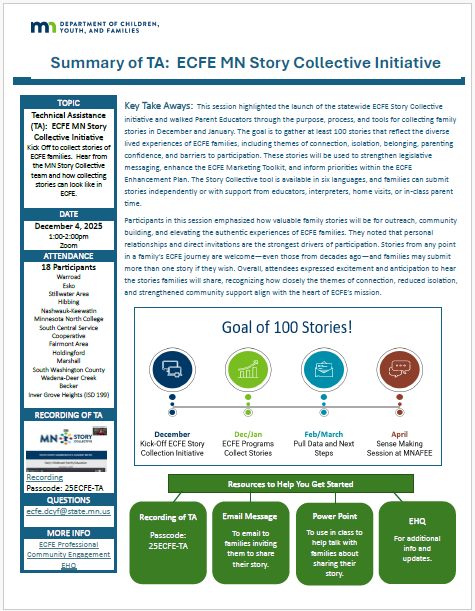
    This session highlighted the launch of the statewide ECFE Story Collective initiative and walked Parent Educators through the purpose, process, and tools for collecting family stories in December and January. The goal is to gather at least 100 stories that reflect the diverse lived experiences of ECFE families, including themes of connection, isolation, belonging, parenting confidence, and barriers to participation. These stories will be used to strengthen legislative messaging, enhance the ECFE Marketing Toolkit, and inform priorities within the ECFE Enhancement Plan. The Story Collective tool is available in six languages, and families can submit stories independently or with support from educators, interpreters, home visits, or in-class parent time.

    Participants in this session emphasized how valuable family stories will be for outreach, community building, and elevating the authentic experiences of ECFE families. They noted that personal relationships and direct invitations are the strongest drivers of participation. Stories from any point in a family’s ECFE journey are welcome—even those from decades ago—and families may submit more than one story if they wish. Overall, attendees expressed excitement and anticipation to hear the stories families will share, recognizing how closely the themes of connection, reduced isolation, and strengthened community support align with the heart of ECFE’s mission.

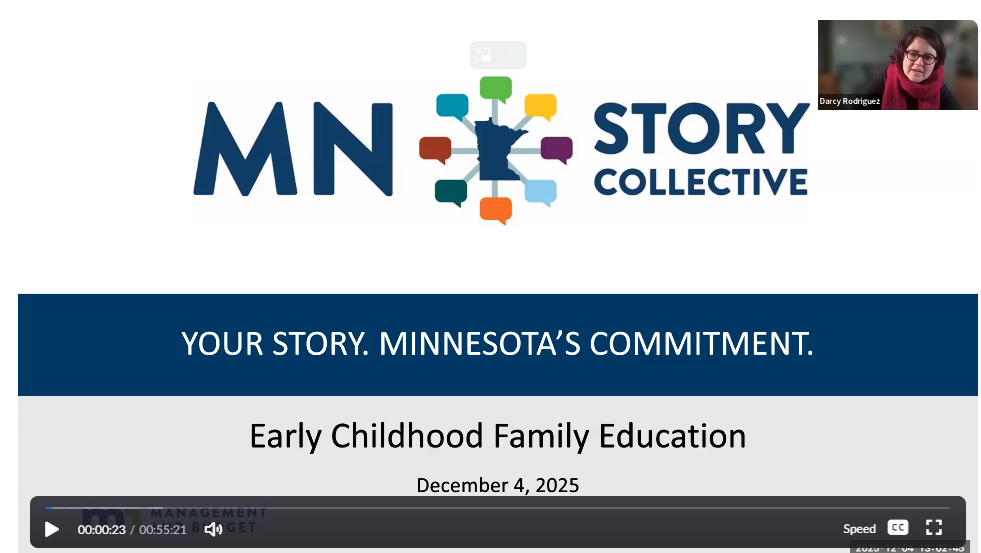
    Watch the Recording

    Passcode: 2.f@m3Yk

    Resources to Help You Get Started

    • This is an email message in the different languages you can copy and paste to send to families, inviting them to share their ECFE story.
    • This is a PowerPoint slide you can use in class to help introduce the project and talk with families about sharing their story.


    Printable Summary
    TA: ECFE MN Story Collective Initiative

    Date: December 4, 2025

    Audience: ECFE Coordinators and Parent Educators

    Key Take Aways

    This session highlighted the launch of the statewide ECFE Story Collective initiative and walked Parent Educators through the purpose, process, and tools for collecting family stories in December and January. The goal is to gather at least 100 stories that reflect the diverse lived experiences of ECFE families, including themes of connection, isolation, belonging, parenting confidence, and barriers to participation. These stories will be used to strengthen legislative messaging, enhance the ECFE Marketing Toolkit, and inform priorities within the ECFE Enhancement Plan. The Story Collective tool is available in six languages, and families can submit stories independently or with support from educators, interpreters, home visits, or in-class parent time.

    Participants in this session emphasized how valuable family stories will be for outreach, community building, and elevating the authentic experiences of ECFE families. They noted that personal relationships and direct invitations are the strongest drivers of participation. Stories from any point in a family’s ECFE journey are welcome—even those from decades ago—and families may submit more than one story if they wish. Overall, attendees expressed excitement and anticipation to hear the stories families will share, recognizing how closely the themes of connection, reduced isolation, and strengthened community support align with the heart of ECFE’s mission.

    Watch the Recording

    Passcode: 2.f@m3Yk


    Resources to Help You Get Started

    • This is an email message in the different languages you can copy and paste to send to families, inviting them to share their ECFE story.
    • This is a PowerPoint slide you can use in class to help introduce the project and talk with families about sharing their story.

    Printable Summary

  • Statewide ECFE Story Collective Initiative​

    Share Statewide ECFE Story Collective Initiative​ on Facebook Share Statewide ECFE Story Collective Initiative​ on Twitter Share Statewide ECFE Story Collective Initiative​ on Linkedin Email Statewide ECFE Story Collective Initiative​ link

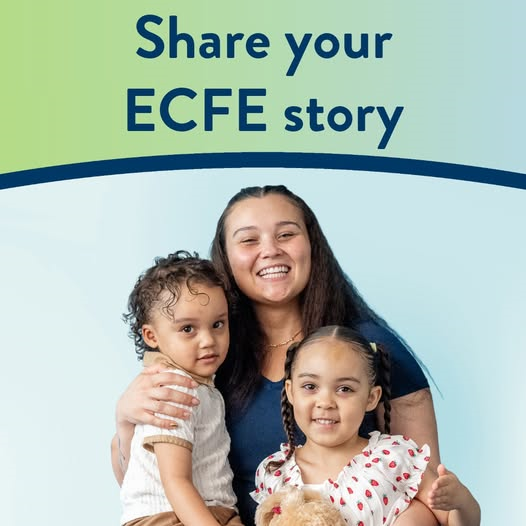
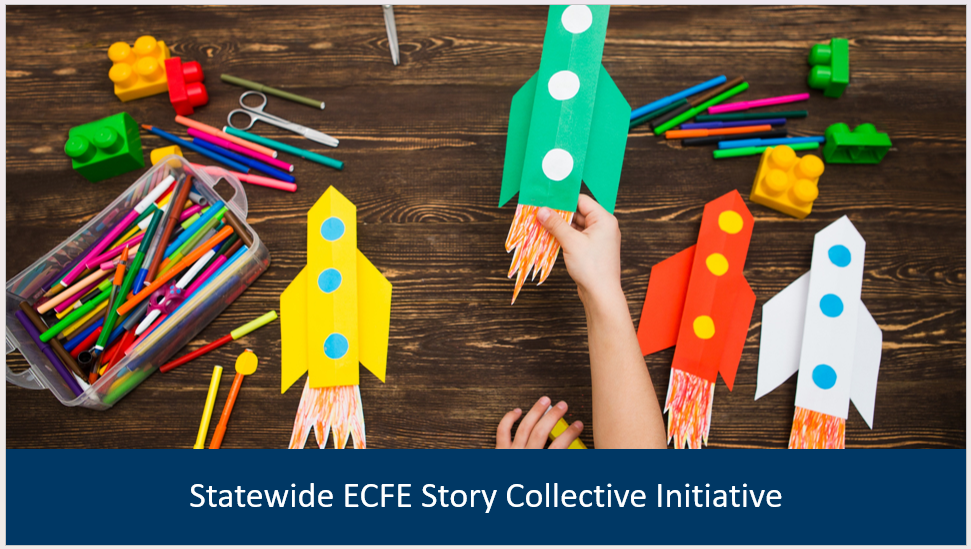
    ECFE is spending December and January in a push to gather family stories from around the state. We are partnering with the MN StoryCollective, who is providing us the structure for the collection and the analysis of the data. Your stories are important. Please tell us your ECFE Story!! We will be using the data collection to understand how we can better serve families, enhance programs, and justify continued and future state investment in ECFE.

    Email version:
    This is an
    email message in the different languages, you can copy and paste to send to families, inviting them to share their ECFE story.

    PowerPoint slide version:
    This is a
    PowerPoint slide you can use in class to help introduce the project and talk with families about sharing their story.

    Slideshow for the ECFE Story Collective Initiative

    ECFE is spending December and January in a push to gather family stories from around the state. We are partnering with the MN StoryCollective, who is providing us the structure for the collection and the analysis of the data. Your stories are important. Please tell us your ECFE Story!! We will be using the data collection to understand how we can better serve families, enhance programs, and justify continued and future state investment in ECFE.

    Email version:
    This is an
    email message in the different languages, you can copy and paste to send to families, inviting them to share their ECFE story.

    PowerPoint slide version:
    This is a
    PowerPoint slide you can use in class to help introduce the project and talk with families about sharing their story.

    Slideshow for the ECFE Story Collective Initiative

  • The ECFE Marketing Toolkit is on Social Media!

    Share The ECFE Marketing Toolkit is on Social Media! on Facebook Share The ECFE Marketing Toolkit is on Social Media! on Twitter Share The ECFE Marketing Toolkit is on Social Media! on Linkedin Email The ECFE Marketing Toolkit is on Social Media! link

    We’re celebrating a major milestone—the launch of the ECFE Marketing Toolkit!

    With posts now live on : LinkedIn and Facebook and a featured article published on the DCYF website as a news article, this resource is reaching families and partners statewide.

    Thank you for being part of this exciting moment for ECFE.

    Explore the toolkit here: https://dcyf.mn.gov/partners-and-providers/child-care-and-early-learning/districts-schools-and-head-start/ECFE/marketing-toolkit
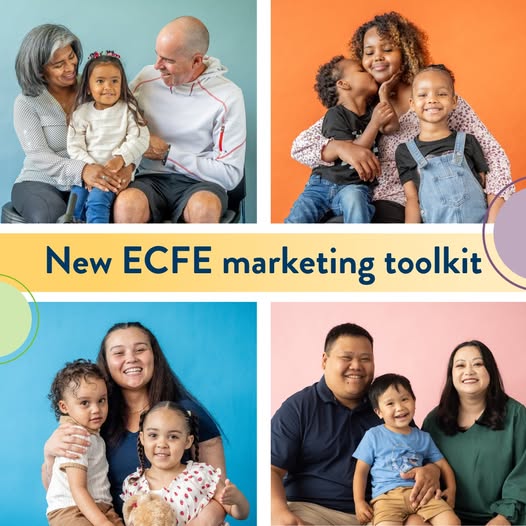
    Collage of four smiling families with text: New ECFE marketing toolkit

    We’re celebrating a major milestone—the launch of the ECFE Marketing Toolkit!

    With posts now live on : LinkedIn and Facebook and a featured article published on the DCYF website as a news article, this resource is reaching families and partners statewide.

    Thank you for being part of this exciting moment for ECFE.

    Explore the toolkit here: https://dcyf.mn.gov/partners-and-providers/child-care-and-early-learning/districts-schools-and-head-start/ECFE/marketing-toolkit

    Collage of four smiling families with text: New ECFE marketing toolkit

  • Summary: Open Office Hour (OOH): Parent Satisfaction Surveys

    Share Summary: Open Office Hour (OOH): Parent Satisfaction Surveys on Facebook Share Summary: Open Office Hour (OOH): Parent Satisfaction Surveys on Twitter Share Summary: Open Office Hour (OOH): Parent Satisfaction Surveys on Linkedin Email Summary: Open Office Hour (OOH): Parent Satisfaction Surveys link

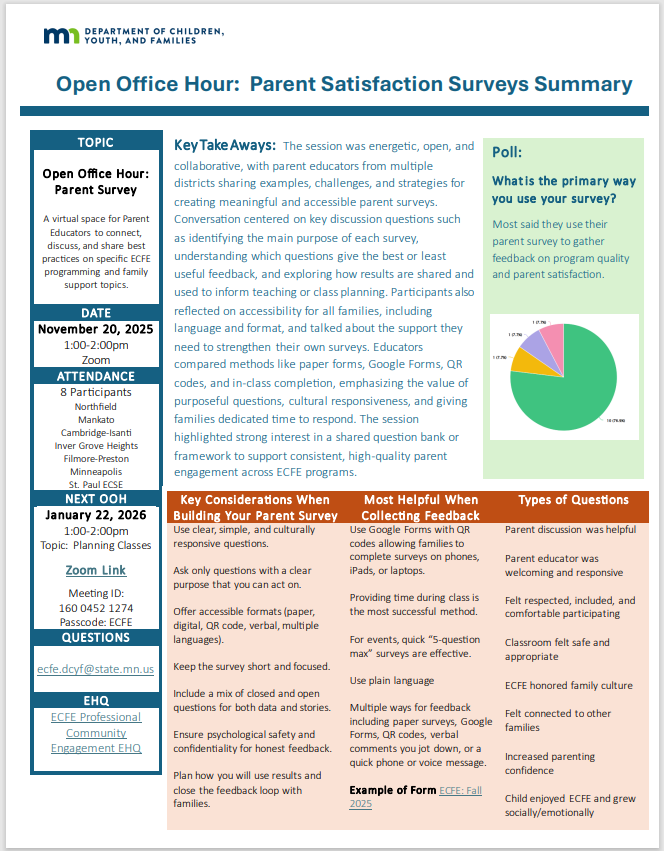
    Open Office Hour: Parent Satisfaction Surveys Summary

    Date: November 20, 2025 (1:00-2:00pm)

    Audience: ECFE Parent Educators

    Key Take Aways: The session was energetic, open, and collaborative, with parent educators from multiple districts sharing examples, challenges, and strategies for creating meaningful and accessible parent surveys. Conversation centered on key discussion questions such as identifying the main purpose of each survey, understanding which questions give the best or least useful feedback, and exploring how results are shared and used to inform teaching or class planning. Participants also reflected on accessibility for all families, including language and format, and talked about the support they need to strengthen their own surveys. Educators compared methods like paper forms, Google Forms, QR codes, and in-class completion, emphasizing the value of purposeful questions, cultural responsiveness, and giving families dedicated time to respond. The session highlighted strong interest in a shared question bank or framework to support consistent, high-quality parent engagement across ECFE programs.

    Key Considerations When Building Your Parent Survey

    Most Helpful When Collecting Feedback

    Types of Questions

    Use clear, simple, and culturally responsive questions.

    Ask only questions with a clear purpose that you can act on.

    Offer accessible formats (paper, digital, QR code, verbal, multiple languages).

    Keep the survey short and focused.

    Include a mix of closed and open questions for both data and stories.

    Ensure psychological safety and confidentiality for honest feedback.

    Plan how you will use results and close the feedback loop with families.

    Use Google Forms with QR codes allowing families to complete surveys on phones, iPads, or laptops.

    Providing time during class is the most successful method.

    For events, quick “5-question max” surveys are effective.

    Use plain language

    Multiple ways for feedback including paper surveys, Google Forms, QR codes, verbal comments you jot down, or a quick phone or voice message.

    Example of Form ECFE: Fall 2025

    Parent discussion was helpful

    Parent educator was welcoming and responsive

    Felt respected, included, and comfortable participating

    Classroom felt safe and appropriate

    ECFE honored family culture

    Felt connected to other families

    Increased parenting confidence

    Child enjoyed ECFE and grew socially/emotionally

    Would recommend ECFE


    For printable version https://minnesotadcyf.us.engagementhq.com/30434/widgets/108529/documents/75534
    Printable version of this summary

    Open Office Hour: Parent Satisfaction Surveys Summary

    Date: November 20, 2025 (1:00-2:00pm)

    Audience: ECFE Parent Educators

    Key Take Aways: The session was energetic, open, and collaborative, with parent educators from multiple districts sharing examples, challenges, and strategies for creating meaningful and accessible parent surveys. Conversation centered on key discussion questions such as identifying the main purpose of each survey, understanding which questions give the best or least useful feedback, and exploring how results are shared and used to inform teaching or class planning. Participants also reflected on accessibility for all families, including language and format, and talked about the support they need to strengthen their own surveys. Educators compared methods like paper forms, Google Forms, QR codes, and in-class completion, emphasizing the value of purposeful questions, cultural responsiveness, and giving families dedicated time to respond. The session highlighted strong interest in a shared question bank or framework to support consistent, high-quality parent engagement across ECFE programs.

    Key Considerations When Building Your Parent Survey

    Most Helpful When Collecting Feedback

    Types of Questions

    Use clear, simple, and culturally responsive questions.

    Ask only questions with a clear purpose that you can act on.

    Offer accessible formats (paper, digital, QR code, verbal, multiple languages).

    Keep the survey short and focused.

    Include a mix of closed and open questions for both data and stories.

    Ensure psychological safety and confidentiality for honest feedback.

    Plan how you will use results and close the feedback loop with families.

    Use Google Forms with QR codes allowing families to complete surveys on phones, iPads, or laptops.

    Providing time during class is the most successful method.

    For events, quick “5-question max” surveys are effective.

    Use plain language

    Multiple ways for feedback including paper surveys, Google Forms, QR codes, verbal comments you jot down, or a quick phone or voice message.

    Example of Form ECFE: Fall 2025

    Parent discussion was helpful

    Parent educator was welcoming and responsive

    Felt respected, included, and comfortable participating

    Classroom felt safe and appropriate

    ECFE honored family culture

    Felt connected to other families

    Increased parenting confidence

    Child enjoyed ECFE and grew socially/emotionally

    Would recommend ECFE


    For printable version https://minnesotadcyf.us.engagementhq.com/30434/widgets/108529/documents/75534

    Printable version of this summary

  • Summary: ECFE Marketing Toolkit Technical Assistance (TA)

    Share Summary: ECFE Marketing Toolkit Technical Assistance (TA) on Facebook Share Summary: ECFE Marketing Toolkit Technical Assistance (TA) on Twitter Share Summary: ECFE Marketing Toolkit Technical Assistance (TA) on Linkedin Email Summary: ECFE Marketing Toolkit Technical Assistance (TA) link

    Screenshot of the TA recording


    Details

    Topic: ECFE Marketing Toolkit Technical Assistance

    Date: November 12 and 13

    Time: 1:00-2:00pm

    How: Zoom


    Overview

    The DCYF ECFE Team hosted two Marketing Toolkit Technical Assistance sessions to show ECFE staff how to find, customize, and use the marketing materials, including a live demo. Educators and partners from across Minnesota shared their enthusiasm, questions, and hopes for how the toolkit will support their work. Participants highlighted the value of ready-to-use materials, consistent statewide messaging, and tools to better reach families, including those from culturally diverse communities. This summary brings together what we heard and outlines how we will continue supporting the field as the toolkit rolls out.


    Highlights from Poll

    What materials may be useful right away?

    Participants were most excited about the ready-to-use social media content, new images and visual assets, and the ECFE video. Many also highlighted the value of website and newsletter text, pre-designed flyers, posters, postcards, and copy-and-paste messaging. Overall, people appreciated having fresh, modern content they can use immediately without needing to create materials from scratch.

    What hopes do you have for the toolkit?

    Participants shared a strong desire for the toolkit to increase family awareness of ECFE, especially in communities where families still don’t know the program exists. They also hope the materials will support consistent statewide messaging, save staff time, strengthen multicultural outreach, boost enrollment, and help ECFE programs become more visible in their communities.

    What questions do you have?

    Participants had thoughtful questions about how to start using the toolkit, whether printed materials would be available, and how to apply the materials to websites, newsletters, and registration systems. They were also curious about whether images or videos could be reused or edited, how the toolkit aligns with other DCYF work such as Screening and Preschool, and how small districts can use the materials efficiently. The most common question was simply, “When can we start using it?”


    Q & A

    Q: When will the toolkit be available to use?

    A: The toolkit is now available on the DCYF website. ECFE Marketing Toolkit | Minnesota Department of Children, Youth, and Families

    Q: Will printed materials be available for purchase?

    A: Printed materials will not be available for purchase. Community partners such as libraries, Head Start programs, public health departments, childcare centers, ECSE teams, family resource centers, and local nonprofits will be able to order selected materials through the online ordering system. Districts will be responsible for printing their own materials, since we strongly recommend, they personalize the templates with their own website and program information.

    Q: How can districts apply the materials to websites, newsletters, registration pages?

    A: All materials include copy-and-paste language, images, and templates that can be added directly to district webpages, digital newsletters, and registration systems. Districts can use the content as-is or pair it with their existing branding.

    Q: Can districts or other programs reuse the images in the toolkit for purposes outside of ECFE?

    A: The images work best when they remain ECFE-specific. Reusing them across different programs can dilute the brand and make ECFE less recognizable to families.

    Q: Can we take the ECFE video apart and reuse the audio with our own images or footage?

    A: We recommend keeping the video intact. The visuals, narration, and pacing were designed to work together to support consistent ECFE messaging and branding across the state. If districts replace the images or pair the audio with different visuals, the message can become less clear, and the overall brand impact is reduced. Using the video as it was created helps maintain strong, recognizable ECFE communication.

    Q: How will the toolkit support outreach to diverse cultural communities?

    A: The toolkit includes imagery, language, and messaging that reflect diverse Minnesota families. It was designed to be inclusive, welcoming, and easy to understand across cultures. Effective outreach also includes understanding the cultural communities in each district. The toolkit provides cultural nuances to support this work, and a full report of the engagement findings that informed the toolkit will be shared in the new year.

    Q: How does this align with other DCYF work (Screening, Preschool, community partnerships)?

    A: The toolkit supports DCYF’s larger effort to strengthen family engagement and promote consistent communication across programs. Early Childhood Screening has its own statewide marketing materials, and while I’m not certain about Preschool-specific materials, family engagement is central to all our work. Once families are connected to ECFE, programs can help them navigate other early learning resources—including Screening, Preschool, and additional supports.

    Q: How should districts use the ready-made materials effectively in practice?

    A: The materials can be used for social media, websites, newsletters, community events, home visits, partnerships and in high-traffic spaces.

    Q: Will this help with marketing in small districts with limited staff?

    A: The toolkit was created to save time and reduce workload, especially for small districts without dedicated marketing staff. The ready-made materials make outreach easier and more efficient. We won’t know exactly what works best until we create a plan, we believe will be effective and try it, but the toolkit provides a strong starting point for that work.

    Q: Are fliers, posters, etc. already printed and available to order?

    A: Print-ready files are available now. Printed materials will be available for community partners to order through the online ordering system after the new year.

    Q: What if we don’t always have time to create our own materials?

    A: That is exactly why the toolkit was created. It provides ready-to-use content so staff can focus on supporting families, not developing marketing materials.


    Support from DCYF ECFE

    Technical Assistance: February 18 and 19 (1-2pm)

    Community of Practice (CoP): Begin in December, reach out to Mi Yang if interested.

    Individual Support: Ongoing, reach out to Mi Yang

    Printed Materials for Community Partners: After January


    Resources

    Recording of Session: ECFE TA: Marketing Toolkit - Zoom Passcode: =J1fvZ#1

    Access Toolkit: ECFE Marketing Toolkit | Minnesota Department of Children, Youth, and Families

    Printable Summary: https://minnesotadcyf.us.engagementhq.com/30434/widgets/108529/documents/75110

    Printable version of this TA summary


    Screenshot of the TA recording


    Details

    Topic: ECFE Marketing Toolkit Technical Assistance

    Date: November 12 and 13

    Time: 1:00-2:00pm

    How: Zoom


    Overview

    The DCYF ECFE Team hosted two Marketing Toolkit Technical Assistance sessions to show ECFE staff how to find, customize, and use the marketing materials, including a live demo. Educators and partners from across Minnesota shared their enthusiasm, questions, and hopes for how the toolkit will support their work. Participants highlighted the value of ready-to-use materials, consistent statewide messaging, and tools to better reach families, including those from culturally diverse communities. This summary brings together what we heard and outlines how we will continue supporting the field as the toolkit rolls out.


    Highlights from Poll

    What materials may be useful right away?

    Participants were most excited about the ready-to-use social media content, new images and visual assets, and the ECFE video. Many also highlighted the value of website and newsletter text, pre-designed flyers, posters, postcards, and copy-and-paste messaging. Overall, people appreciated having fresh, modern content they can use immediately without needing to create materials from scratch.

    What hopes do you have for the toolkit?

    Participants shared a strong desire for the toolkit to increase family awareness of ECFE, especially in communities where families still don’t know the program exists. They also hope the materials will support consistent statewide messaging, save staff time, strengthen multicultural outreach, boost enrollment, and help ECFE programs become more visible in their communities.

    What questions do you have?

    Participants had thoughtful questions about how to start using the toolkit, whether printed materials would be available, and how to apply the materials to websites, newsletters, and registration systems. They were also curious about whether images or videos could be reused or edited, how the toolkit aligns with other DCYF work such as Screening and Preschool, and how small districts can use the materials efficiently. The most common question was simply, “When can we start using it?”


    Q & A

    Q: When will the toolkit be available to use?

    A: The toolkit is now available on the DCYF website. ECFE Marketing Toolkit | Minnesota Department of Children, Youth, and Families

    Q: Will printed materials be available for purchase?

    A: Printed materials will not be available for purchase. Community partners such as libraries, Head Start programs, public health departments, childcare centers, ECSE teams, family resource centers, and local nonprofits will be able to order selected materials through the online ordering system. Districts will be responsible for printing their own materials, since we strongly recommend, they personalize the templates with their own website and program information.

    Q: How can districts apply the materials to websites, newsletters, registration pages?

    A: All materials include copy-and-paste language, images, and templates that can be added directly to district webpages, digital newsletters, and registration systems. Districts can use the content as-is or pair it with their existing branding.

    Q: Can districts or other programs reuse the images in the toolkit for purposes outside of ECFE?

    A: The images work best when they remain ECFE-specific. Reusing them across different programs can dilute the brand and make ECFE less recognizable to families.

    Q: Can we take the ECFE video apart and reuse the audio with our own images or footage?

    A: We recommend keeping the video intact. The visuals, narration, and pacing were designed to work together to support consistent ECFE messaging and branding across the state. If districts replace the images or pair the audio with different visuals, the message can become less clear, and the overall brand impact is reduced. Using the video as it was created helps maintain strong, recognizable ECFE communication.

    Q: How will the toolkit support outreach to diverse cultural communities?

    A: The toolkit includes imagery, language, and messaging that reflect diverse Minnesota families. It was designed to be inclusive, welcoming, and easy to understand across cultures. Effective outreach also includes understanding the cultural communities in each district. The toolkit provides cultural nuances to support this work, and a full report of the engagement findings that informed the toolkit will be shared in the new year.

    Q: How does this align with other DCYF work (Screening, Preschool, community partnerships)?

    A: The toolkit supports DCYF’s larger effort to strengthen family engagement and promote consistent communication across programs. Early Childhood Screening has its own statewide marketing materials, and while I’m not certain about Preschool-specific materials, family engagement is central to all our work. Once families are connected to ECFE, programs can help them navigate other early learning resources—including Screening, Preschool, and additional supports.

    Q: How should districts use the ready-made materials effectively in practice?

    A: The materials can be used for social media, websites, newsletters, community events, home visits, partnerships and in high-traffic spaces.

    Q: Will this help with marketing in small districts with limited staff?

    A: The toolkit was created to save time and reduce workload, especially for small districts without dedicated marketing staff. The ready-made materials make outreach easier and more efficient. We won’t know exactly what works best until we create a plan, we believe will be effective and try it, but the toolkit provides a strong starting point for that work.

    Q: Are fliers, posters, etc. already printed and available to order?

    A: Print-ready files are available now. Printed materials will be available for community partners to order through the online ordering system after the new year.

    Q: What if we don’t always have time to create our own materials?

    A: That is exactly why the toolkit was created. It provides ready-to-use content so staff can focus on supporting families, not developing marketing materials.


    Support from DCYF ECFE

    Technical Assistance: February 18 and 19 (1-2pm)

    Community of Practice (CoP): Begin in December, reach out to Mi Yang if interested.

    Individual Support: Ongoing, reach out to Mi Yang

    Printed Materials for Community Partners: After January


    Resources

    Recording of Session: ECFE TA: Marketing Toolkit - Zoom Passcode: =J1fvZ#1

    Access Toolkit: ECFE Marketing Toolkit | Minnesota Department of Children, Youth, and Families

    Printable Summary: https://minnesotadcyf.us.engagementhq.com/30434/widgets/108529/documents/75110

    Printable version of this TA summary


  • ECFE marketing toolkit launch

    Share ECFE marketing toolkit launch on Facebook Share ECFE marketing toolkit launch on Twitter Share ECFE marketing toolkit launch on Linkedin Email ECFE marketing toolkit launch link

    Cover of the ECFE marketing toolkit. Parent and child play together with colorful blocks.

    A new ECFE marketing toolkit will launch on Thursday, October 30. DCYF staff will be introducing the toolkit at the MCEA conference.

    The toolkit includes practical tools designed to meet local communication needs, including:

    • Customizable templates: Posters, postcards, social media posts and more that can be tailored with program-specific details. All templates have also been translated into Spanish, Somali and Hmong.
    • Messaging guide: Core messages and sample language to explain ECFE’s benefits in clear, parent-friendly terms
    • Outreach strategies: Evidence-informed practices for connecting with families, including approaches for reaching those who may not be familiar with ECFE

    The resource was co-created with families and ECFE coordinators to strengthen trust, visibility and engagement across all communities.

    The state is hosting brief training sessions to help you locate, customize and effectively use the provided marketing flyers and outreach resources. Events are on:

    • November 12, 1-2 p.m.
    • November 13, 1-2 p.m.

    Join us on Zoom. Please log in with your school email.

    For more information, email ecfe.dcyf@state.mn.us.


    Cover of the ECFE marketing toolkit. Parent and child play together with colorful blocks.

    A new ECFE marketing toolkit will launch on Thursday, October 30. DCYF staff will be introducing the toolkit at the MCEA conference.

    The toolkit includes practical tools designed to meet local communication needs, including:

    • Customizable templates: Posters, postcards, social media posts and more that can be tailored with program-specific details. All templates have also been translated into Spanish, Somali and Hmong.
    • Messaging guide: Core messages and sample language to explain ECFE’s benefits in clear, parent-friendly terms
    • Outreach strategies: Evidence-informed practices for connecting with families, including approaches for reaching those who may not be familiar with ECFE

    The resource was co-created with families and ECFE coordinators to strengthen trust, visibility and engagement across all communities.

    The state is hosting brief training sessions to help you locate, customize and effectively use the provided marketing flyers and outreach resources. Events are on:

    • November 12, 1-2 p.m.
    • November 13, 1-2 p.m.

    Join us on Zoom. Please log in with your school email.

    For more information, email ecfe.dcyf@state.mn.us.


Page last updated: 29 Apr 2026, 02:28 PM