ECFE Professional Community Engagement

The ECFE Professional Community Engagement Page
This is your central online space to stay connected with Minnesota’s ECFE network. Here, you’ll find official updates from the DCYF ECFE team and spaces to connect with peers, share ideas, and learn from one another.
Official Communication
Find key announcements, updates, and opportunities from the DCYF ECFE team in one place.
Peer Networking
Join discussions with ECFE professionals across the state on topics like lesson planning, classroom environments, and parenting research.
Please register with your school email to participate.
Questions? Contact: ecfe.dcyf@state.mn.us
-
Welcome Back, ECFE! 2026-27 Fall Update
Share Welcome Back, ECFE! 2026-27 Fall Update on Facebook Share Welcome Back, ECFE! 2026-27 Fall Update on X (formerly Twitter) Share Welcome Back, ECFE! 2026-27 Fall Update on Linkedin Email Welcome Back, ECFE! 2026-27 Fall Update link
Welcome Back, ECFE!
A Year of Connecting Across ECFE
Welcome to the 2026–27 school year! We are excited for another year of connecting, sharing, learning, and growing together across ECFE.
Our Welcome Back ECFE: Fall Updates slide deck includes upcoming opportunities, professional learning, resources, and ways to stay connected with DCYF and with ECFE colleagues across Minnesota.
View or download the Welcome Back ECFE slide deck below.
We are so glad you are here and look forward to connecting with you throughout the year!
Your DCYF ECFE Team
-
ECFE Spring Updates and End-Of-Year Wishes
Share ECFE Spring Updates and End-Of-Year Wishes on Facebook Share ECFE Spring Updates and End-Of-Year Wishes on X (formerly Twitter) Share ECFE Spring Updates and End-Of-Year Wishes on Linkedin Email ECFE Spring Updates and End-Of-Year Wishes link
Dear ECFE Educators,
As the school year comes to a close, we are happy to share our Spring Updates 2026 slide deck.
The slide deck includes a thank-you message to recognize all you have done for families this year, along with updates, resources, and upcoming opportunities for ECFE educators and coordinators.
Inside, you will find:
• A reminder about the 2025–26 ECFE Community Needs Assessment for Coordinators
• Information about the statewide Early Care and Education Workforce Survey
• Ways to continue collecting ECFE family stories
• Upcoming professional development and networking opportunities
• Resources to stay connected with the DCYF ECFE team and other ECFE professionals
• Marketing tools and free materials to help promote ECFE in your communityWe hope these updates and resources are helpful as you wrap up the school year and begin planning for next year.
Thank you for the care, dedication, and heart you bring to children and families across Minnesota. Your work makes a meaningful difference every day.
We wish you a restful and enjoyable summer.
With appreciation,
Darcy, Mike, and Mi
-
Follow-up from the MN Story Collective Sense Making Session at MNAFEE
Share Follow-up from the MN Story Collective Sense Making Session at MNAFEE on Facebook Share Follow-up from the MN Story Collective Sense Making Session at MNAFEE on X (formerly Twitter) Share Follow-up from the MN Story Collective Sense Making Session at MNAFEE on Linkedin Email Follow-up from the MN Story Collective Sense Making Session at MNAFEE linkFollow-up from the MN StoryCollective Sense Making Session at MNAFEE
ECFE has committed to working with the MN StoryCollective to collect ECFE stories from families across the state. At the MNAFEE conference this spring, we presented these stories. During the session, teachers and administrators had a chance to read the stories and analyze them for themes. We divided the stories into four areas that connect back to quality ECFE practice:
- Parent Education
- Parent-Parent Support
- Community Resources
- Parent-Child Interactions
Please take a look at the stories, slides and notes that came out of the session and think about how it might relate to the work that you are doing in your own district.
ECFE Story Pack with Notes https://minnesotadcyf.us.engagementhq.com/30434/widgets/108529/documents/80900
ECFE Story Collective Slides MNAFEE Conference 2026 https://minnesotadcyf.us.engagementhq.com/30434/widgets/108529/documents/80901
-
Help improve DCYF's website: Share your experience
Share Help improve DCYF's website: Share your experience on Facebook Share Help improve DCYF's website: Share your experience on X (formerly Twitter) Share Help improve DCYF's website: Share your experience on Linkedin Email Help improve DCYF's website: Share your experience linkHelp improve DCYF's website: Share your experience
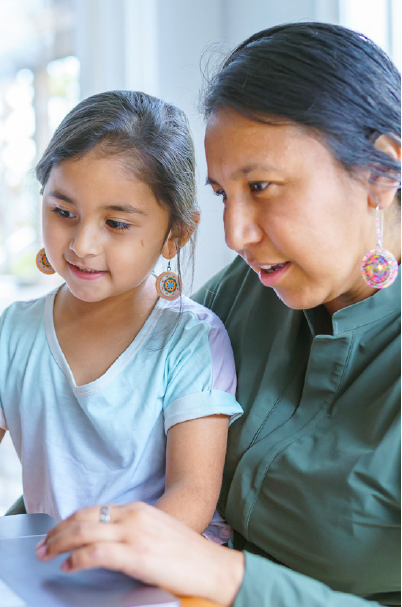 DCYF is working to improve our website, dcyf.mn.gov, so it better serves families and communities across Minnesota.
 We’re looking for people to share their feedback on our website in a short research session to help us meet our users' diverse needs.
Your feedback will help us understand what works well, what’s confusing, and what could be improved.
-
ECFE Marketing Videos
Share ECFE Marketing Videos on Facebook Share ECFE Marketing Videos on X (formerly Twitter) Share ECFE Marketing Videos on Linkedin Email ECFE Marketing Videos linkDon't Forget we have ECFE videos to help you market your program!
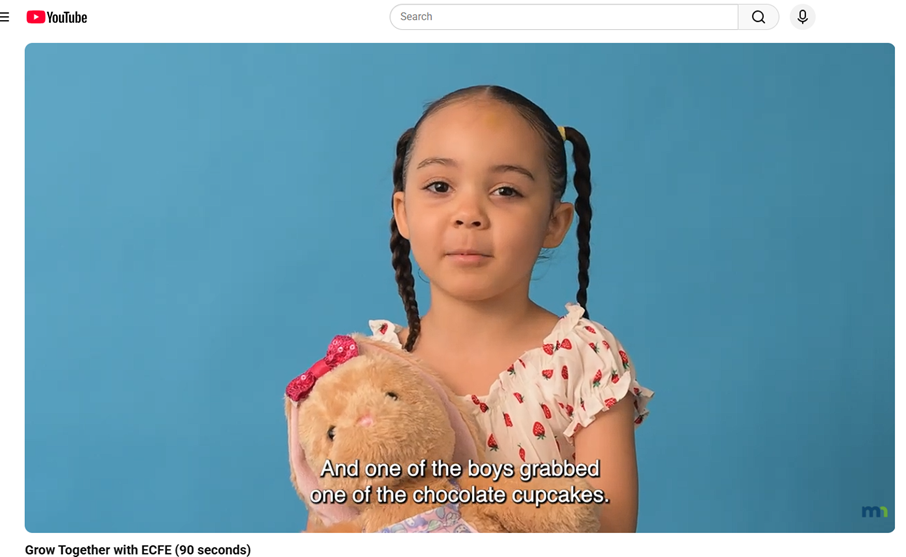
Grow Together with ECFE. Early Childhood Family Education (ECFE) offers caregivers of young children a space to connect with other families and participate in activities that support both parenting and children's learning and development. View videos available in English, Spanish, Somali, and Hmong to learn more.
- English - 90 Sec Grow Together with ECFE (90 seconds)
- English – 60 Sec Grow Together with ECFE (60 seconds)
- English – 30 Sec Grow Together with ECFE (30 seconds)
- English – 15 Sec Grow together with ECFE (15 seconds)
- Spanish – 90 Sec Crezcamos juntos con ECFE (90 segundos)
- Spanish – 60 Sec Crezcamos juntos con ECFE (60 segundos)
- Spanish – 30 Sec Crezcamos juntos con ECFE (30 segundos)
- Spanish – 15 Sec Crezcamos juntos con ECFE (15 segundos)
- Hmong – 90 Sec Loj hlob ua ke nrog ECFE (90 nqi)
- Hmong – 60 Sec Loj hlob ua ke nrog ECFE (60 vib nas this)
- Hmong – 30 Sec Loj hlob ua ke nrog ECFE (30 vib nas this)
- Hmong – 15 Sec Loj hlob ua ke nrog ECFE (15 vib nas this)
- Somali – 90 Sec Si wadajir ah ula kor ECFE (90 ilbiriqsi)
- Somali – 60 Sec Si wadajir ah ula kor ECFE (60 ilbiriqsi)
- Somali – 30 Sec Si wadajir ah ula kor ECFE (30 ilbiriqsi)
- Somali – 15 Sec Si wadajir ah ula kor ECFE (15 ilbiriqsi)
-
ECFE Posters and Rack Cards - Order Form for Partnerships
Share ECFE Posters and Rack Cards - Order Form for Partnerships on Facebook Share ECFE Posters and Rack Cards - Order Form for Partnerships on X (formerly Twitter) Share ECFE Posters and Rack Cards - Order Form for Partnerships on Linkedin Email ECFE Posters and Rack Cards - Order Form for Partnerships linkPlease share this with your networks! Feel free to use the language and images below when sharing.
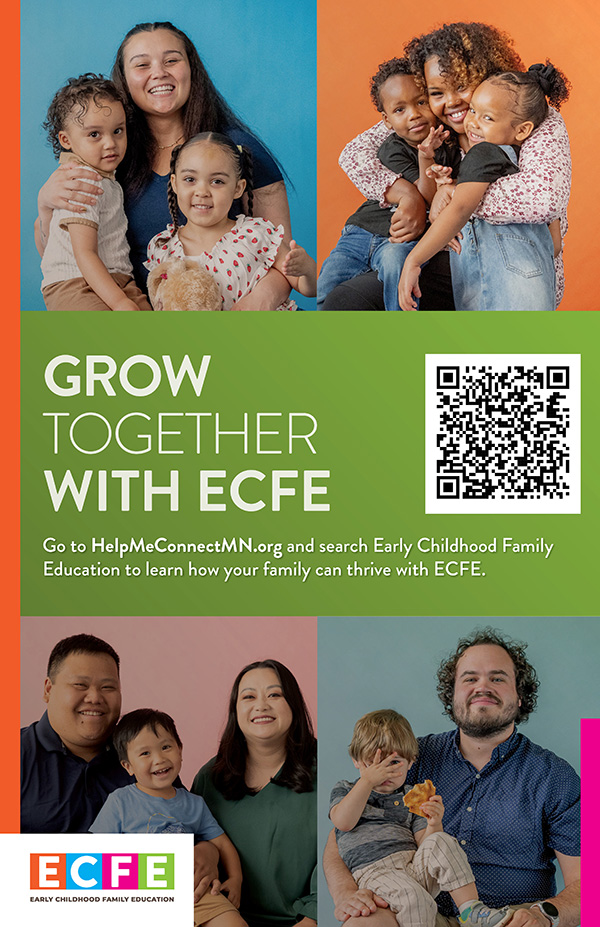
Help spread the word about Early Childhood Family Education (ECFE) in your community.
Community partners such as childcare providers, libraries, clinics, county agencies and more can now order posters and rack cards to promote ECFE.
These free materials are available in English, Spanish, Somali and Hmong.
-
Help Me Connect
Share Help Me Connect on Facebook Share Help Me Connect on X (formerly Twitter) Share Help Me Connect on Linkedin Email Help Me Connect linkWhat is Help Me Connect?
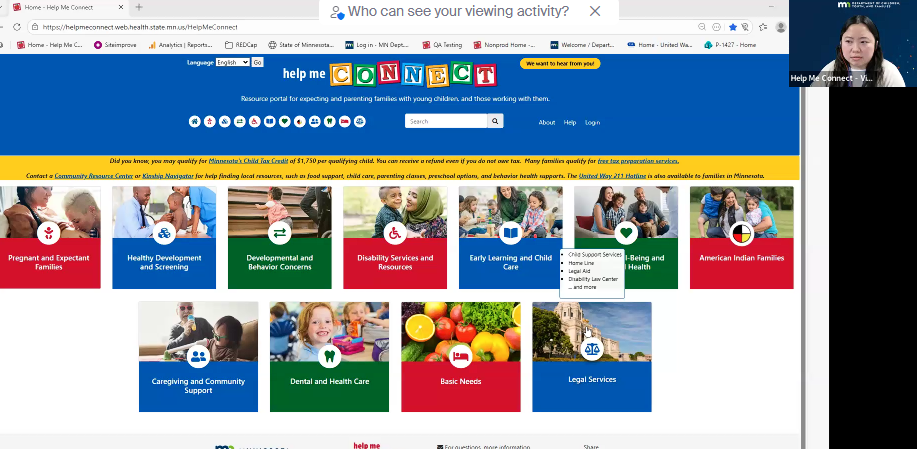
Help Me Connect is a resource portal that helps expecting and parenting families of young children—and those working with them—find services and programs across Minnesota.
Learn More
Join monthly technical assistance sessions to learn practical tips and tools for getting the most out of the site. Sessions take place on the second Wednesday of each month from 12–1 p.m. Register online.
This month, Help Me Connect demonstrated how to create an account and use the Save to My Favorites feature, highlighting recent updates.
Visit HelpMeConnectMN.org for more information and training videos.
Watch this video to learn how to navigate the Help Me Connect page.
Passcode: 9FpV$XTQ
-
DCYF Events Calendar
Share DCYF Events Calendar on Facebook Share DCYF Events Calendar on X (formerly Twitter) Share DCYF Events Calendar on Linkedin Email DCYF Events Calendar linkDCYF Events Calendar
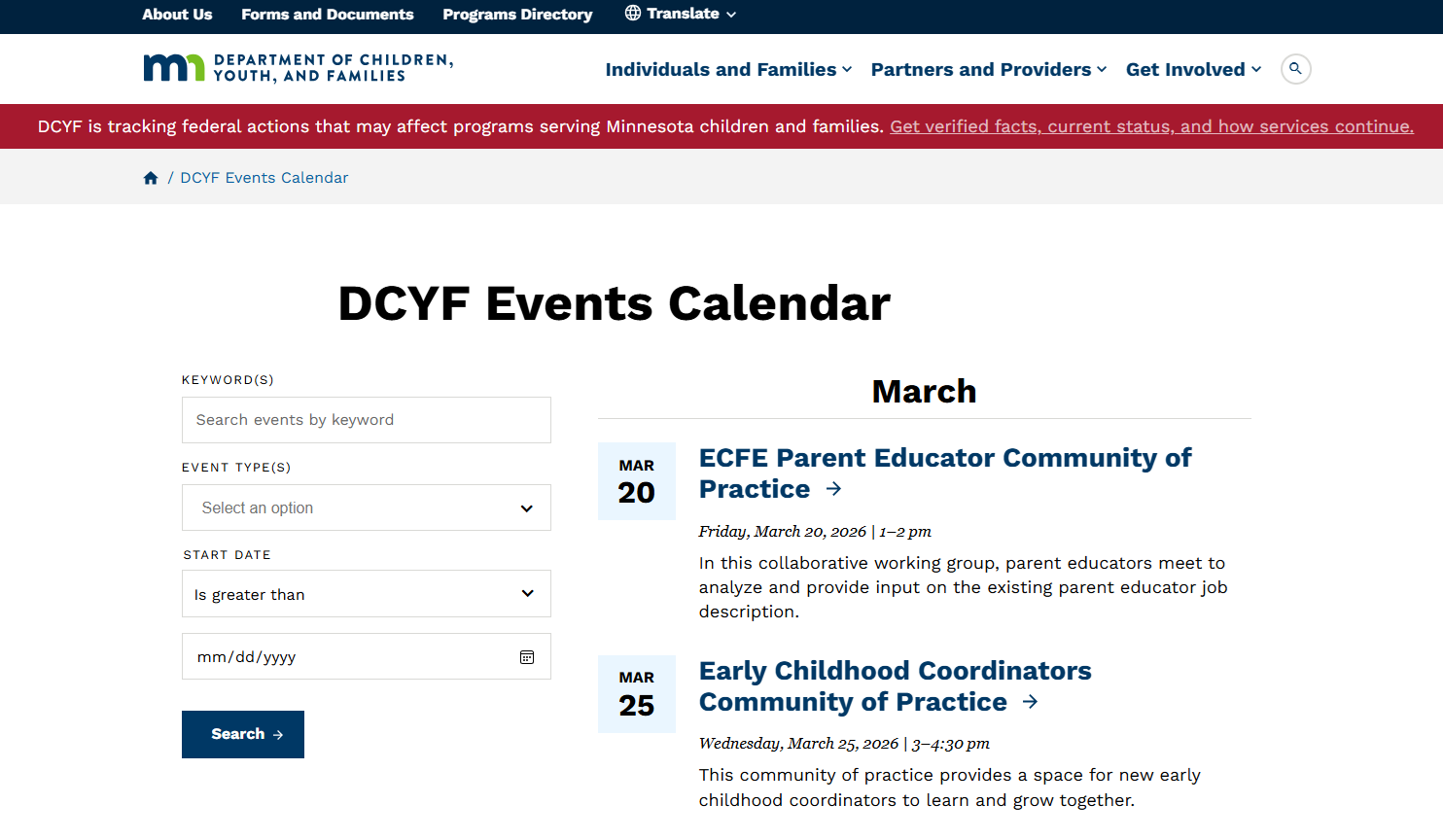
Stay connected to upcoming opportunities across Minnesota’s early childhood system through the DCYF Events Calendar. This calendar highlights trainings, meetings, technical assistance sessions, and other events relevant to ECFE professionals, partners, and community members.
Click on the link to find important dates, plan ahead, and stay informed about statewide and local activities that support your work with families.
DCYF Events Calendar | Minnesota Department of Children, Youth, and Families
-
Licensed Parent Educator Map
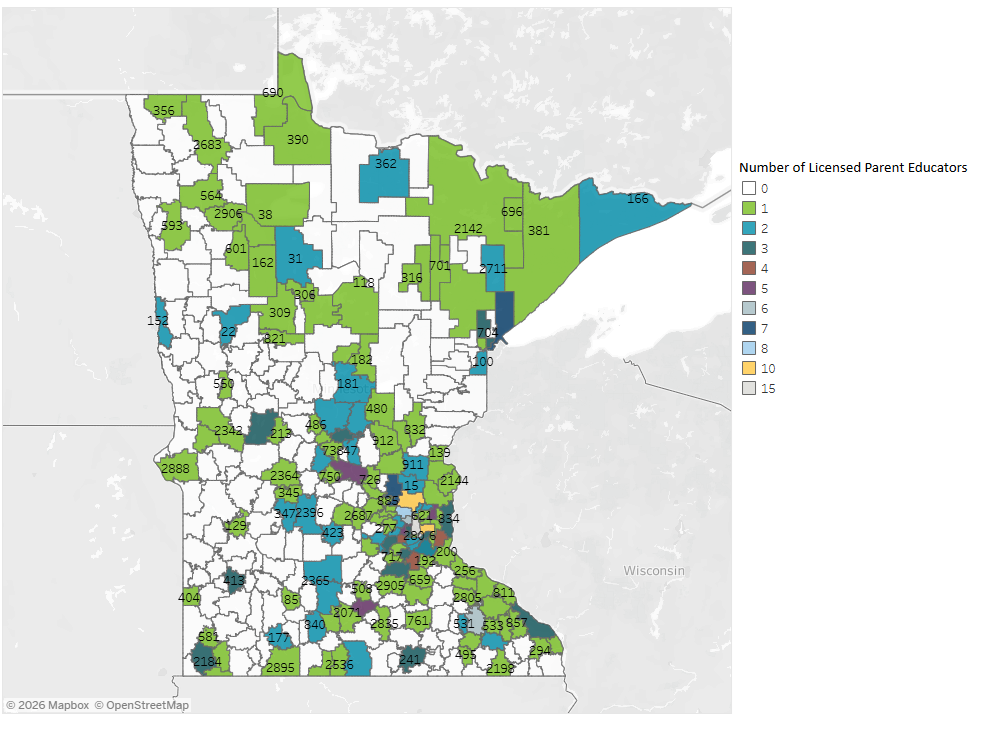
Share Licensed Parent Educator Map on Facebook Share Licensed Parent Educator Map on X (formerly Twitter) Share Licensed Parent Educator Map on Linkedin Email Licensed Parent Educator Map linkThe Licensed Parent Educator Map is an interactive tool that shows the number of Parent Educators in ECFE programs across Minnesota.
Review your district on the map and let us know if the number of Parent Educators listed needs to be updated.
View the Parent Education Map here:
-
TA Summary: ECFE Parent Education Licensure
Share TA Summary: ECFE Parent Education Licensure on Facebook Share TA Summary: ECFE Parent Education Licensure on X (formerly Twitter) Share TA Summary: ECFE Parent Education Licensure on Linkedin Email TA Summary: ECFE Parent Education Licensure linkTechnical Assistance Call Recording and Slides
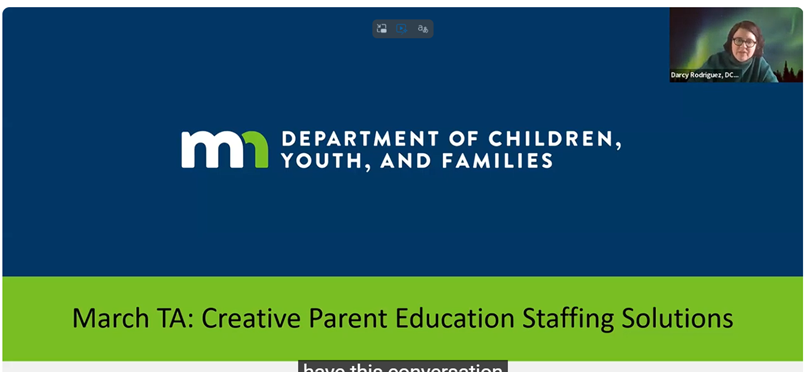
ECFE: Parent Education Licensure - YouTube
This is the video recording of the Technical Assistance call held on March 4, 2026. The purpose of the call was to share creative ideas and strategies for addressing Parent Education staffing challenges that many districts are experiencing.
You can also view the PowerPoint slides from the session here:
https://minnesotadcyf.us.engagementhq.com/30434/widgets/108529/documents/75110
-
ECFE Specialists
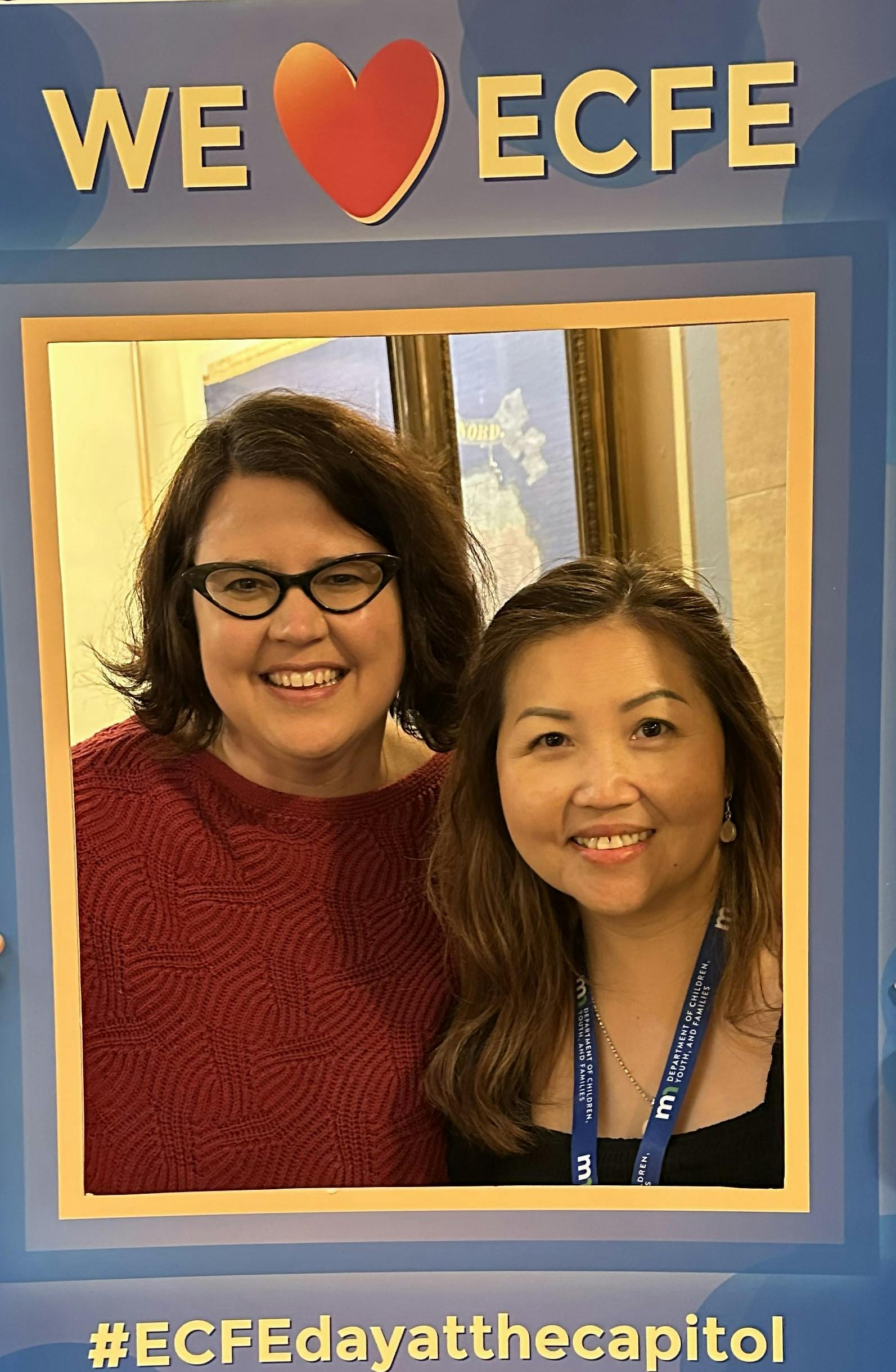
Email ecfe.dcyf@state.mn.us