DCYF Comprehensive Child Welfare Information System Project
The Minnesota Department of Children, Youth, and Families is launching a major modernization of the Social Services Information System. The new Child Welfare Information System will replace the SSIS platform’s child welfare tool, which has been in place for more than 25 years.
The goal is to build a modern system that meets federal rules called the Comprehensive Child Welfare Information System.
The Minnesota Department of Children, Youth, and Families is launching a major modernization of the Social Services Information System. The new Child Welfare Information System will replace the SSIS platform’s child welfare tool, which has been in place for more than 25 years.
The goal is to build a modern system that meets federal rules called the Comprehensive Child Welfare Information System.
-
Data Cleanup Efforts Update
Share Data Cleanup Efforts Update on Facebook Share Data Cleanup Efforts Update on Twitter Share Data Cleanup Efforts Update on Linkedin Email Data Cleanup Efforts Update linkSSIS Data Cleanup Efforts Continue to Show Strong Progress Across Minnesota
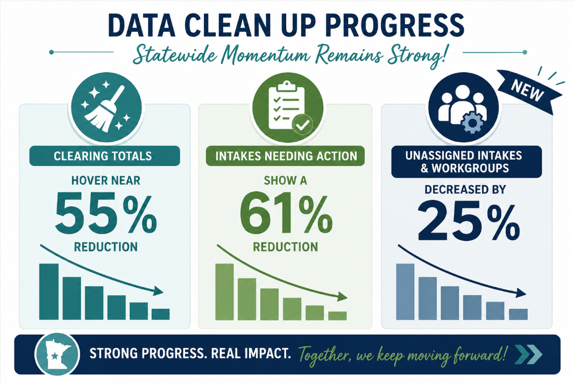
Minnesota’s SSIS data cleanup efforts continue to show strong, measurable progress. Counties and tribal nations have significantly reduced both the Clearing Log and Intakes Needing Action (INA) backlogs through sustained focus and collaboration.
Statewide Highlights (as of June 9):
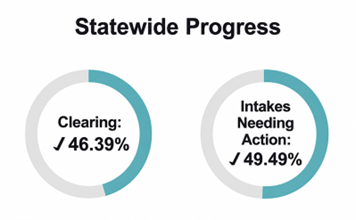
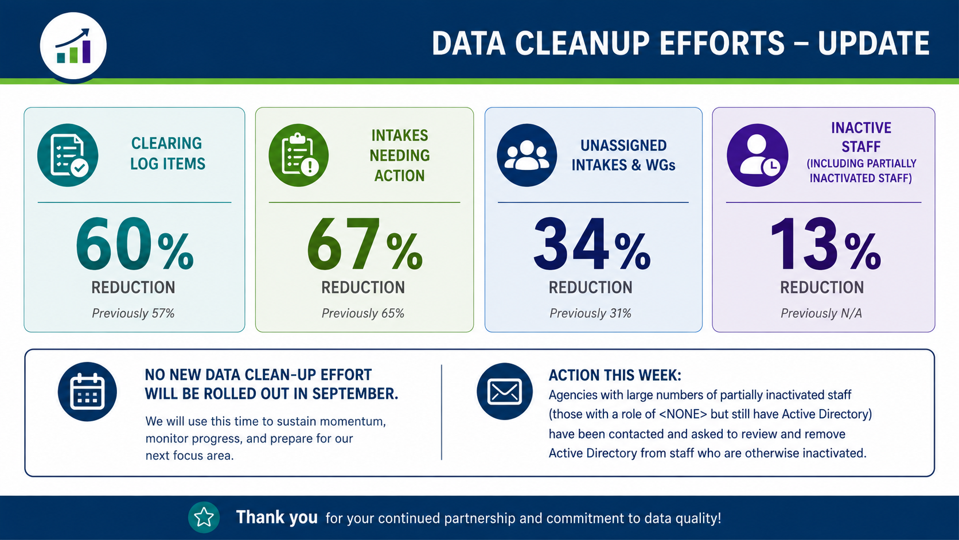
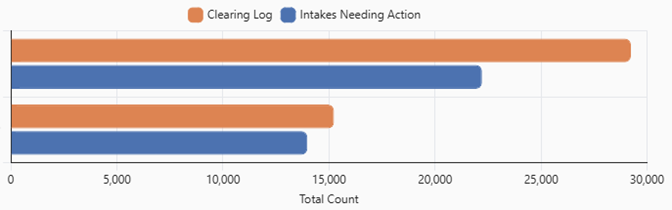
• Clearing Log Backlog: Now at 15,236 records — a 48% reduction since March.
• Intakes Needing Action: Down 37%, now at just under 14,000 statewide.
Agency Level Progress
Agencies across the state continue to make steady improvements in both Intakes Needing Action and Clearing work:
• 52 agencies reduced their Intakes Needing Action between March and June 9.
• 68 agencies reduced their Clearing Log totals during the same period.
These reductions reflect your dedicated cleanup work and strong collaboration—both within agencies and between agencies and SSIS state staff. This progress also demonstrates a shared understanding that quality data supports better outcomes for children, families, and workers.
Thank you for your continued engagement and partnership in these cleanup efforts. Your work is making a real, measurable difference.
For questions or support, please email dcyf.ssishelp@state.mn.us.
SSIS Data Cleanup Efforts Continue to Show Strong Progress Across Minnesota
Minnesota’s SSIS data cleanup efforts continue to show strong, measurable progress. Counties and tribal nations have significantly reduced both the Clearing Log and Intakes Needing Action (INA) backlogs through sustained focus and collaboration.
Statewide Highlights (as of June 9):
• Clearing Log Backlog: Now at 15,236 records — a 48% reduction since March.
• Intakes Needing Action: Down 37%, now at just under 14,000 statewide.

Agency Level Progress
Agencies across the state continue to make steady improvements in both Intakes Needing Action and Clearing work:
• 52 agencies reduced their Intakes Needing Action between March and June 9.
• 68 agencies reduced their Clearing Log totals during the same period.
These reductions reflect your dedicated cleanup work and strong collaboration—both within agencies and between agencies and SSIS state staff. This progress also demonstrates a shared understanding that quality data supports better outcomes for children, families, and workers.
Thank you for your continued engagement and partnership in these cleanup efforts. Your work is making a real, measurable difference.
For questions or support, please email dcyf.ssishelp@state.mn.us.
-
SSIS Data Clean-Up Efforts: Focus Area Update – Intakes Needing Action
Share SSIS Data Clean-Up Efforts: Focus Area Update – Intakes Needing Action on Facebook Share SSIS Data Clean-Up Efforts: Focus Area Update – Intakes Needing Action on Twitter Share SSIS Data Clean-Up Efforts: Focus Area Update – Intakes Needing Action on Linkedin Email SSIS Data Clean-Up Efforts: Focus Area Update – Intakes Needing Action linkAs we continue our statewide data clean-up work, SSIS/CCWIS will maintain regular tracking and monitoring of agency progress on Clearing. While Clearing remains an important metric, this month we are expanding our efforts with a new primary focus area: Intakes Needing Action.
Quick Update on Clearing Progress
Agencies across the state continue to make measurable progress in reducing the number of uncleared clients and workgroups. Over 50% of agencies statewide saw significant reductions in clearing log totals this past month. Though we did see some increases in totals for around 10 agencies, some of the increases may be related to inaccurate counts of reconcile records on the clearing logs in previous months so may not actually constitute an increase in clearing log totals.
Moving forward these will be included in the total clearing log counts and should be reconciled timely along with uncleared clients.
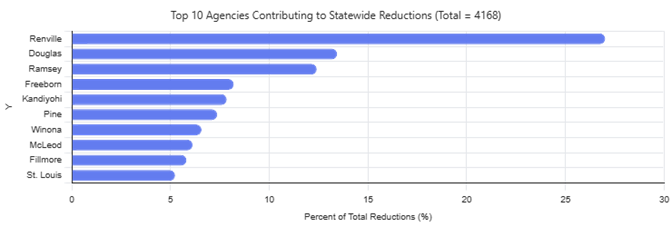
The chart below highlights the top 10 agencies contributing to statewide clearing‑log reductions. These agencies collectively reduced their clearing totals by 4,168 clients, representing most of the statewide progress from March to May. Showing the percentage of contribution of each agency helps illustrate their impact on overall improvement.
Thank you for your ongoing focus and efforts—your work is making a noticeable difference.
New Focus Area: Intakes Needing Action
This month, agencies are encouraged to prioritize reviewing and resolving Intakes Needing Action, with an emphasis on reducing backlogs and improving timeliness.
Addressing these older intakes supports accuracy throughout the entire child welfare workflow — from intake to assessments and case management — and helps ensure that children, families, and adults do not fall through the cracks due to incomplete or delayed information.
Over the next several weeks, the SSIS/CCWIS data clean up team will:
- Review statewide Intakes Needing Action trends and progress
- Monitor agency-level reductions
- Reach out/offer support to agencies with high or persistent backlogs
- Continue to track and report Clearing progress alongside this new focus area
What Agencies Can Expect
- Outreach: Agencies with high numbers of uncleared clients and/or high volumes of Intakes Needing Action will be contacted before June 1st
-
Resources:
- SSIS Data Cleanup – Strengthening Our Data for What’s Next (4 minutes), is a short video that can be shared with agency staff. It provides a brief, high‑level look at the cleanup effort for mentors, agency staff, and others supporting this work.
- Intakes needing Action job aid
- Intake Module
- Ongoing Updates: Updates are posted at least monthly on the Sentiment & Feedback site. Short updates will also be provided at various coffee talks, Technical mtgs as well as SSIS Update articles.
Thank you for your continued engagement and leadership in improving data quality statewide. Your efforts are making a noticeable difference. For questions or support, please email dcyf.ssishelp@state.mn.us.
As we continue our statewide data clean-up work, SSIS/CCWIS will maintain regular tracking and monitoring of agency progress on Clearing. While Clearing remains an important metric, this month we are expanding our efforts with a new primary focus area: Intakes Needing Action.
Quick Update on Clearing Progress
Agencies across the state continue to make measurable progress in reducing the number of uncleared clients and workgroups. Over 50% of agencies statewide saw significant reductions in clearing log totals this past month. Though we did see some increases in totals for around 10 agencies, some of the increases may be related to inaccurate counts of reconcile records on the clearing logs in previous months so may not actually constitute an increase in clearing log totals.
Moving forward these will be included in the total clearing log counts and should be reconciled timely along with uncleared clients.
The chart below highlights the top 10 agencies contributing to statewide clearing‑log reductions. These agencies collectively reduced their clearing totals by 4,168 clients, representing most of the statewide progress from March to May. Showing the percentage of contribution of each agency helps illustrate their impact on overall improvement.

Thank you for your ongoing focus and efforts—your work is making a noticeable difference.
New Focus Area: Intakes Needing Action
This month, agencies are encouraged to prioritize reviewing and resolving Intakes Needing Action, with an emphasis on reducing backlogs and improving timeliness.
Addressing these older intakes supports accuracy throughout the entire child welfare workflow — from intake to assessments and case management — and helps ensure that children, families, and adults do not fall through the cracks due to incomplete or delayed information.
Over the next several weeks, the SSIS/CCWIS data clean up team will:
- Review statewide Intakes Needing Action trends and progress
- Monitor agency-level reductions
- Reach out/offer support to agencies with high or persistent backlogs
- Continue to track and report Clearing progress alongside this new focus area
What Agencies Can Expect
- Outreach: Agencies with high numbers of uncleared clients and/or high volumes of Intakes Needing Action will be contacted before June 1st
-
Resources:
- SSIS Data Cleanup – Strengthening Our Data for What’s Next (4 minutes), is a short video that can be shared with agency staff. It provides a brief, high‑level look at the cleanup effort for mentors, agency staff, and others supporting this work.
- Intakes needing Action job aid
- Intake Module
- Ongoing Updates: Updates are posted at least monthly on the Sentiment & Feedback site. Short updates will also be provided at various coffee talks, Technical mtgs as well as SSIS Update articles.
Thank you for your continued engagement and leadership in improving data quality statewide. Your efforts are making a noticeable difference. For questions or support, please email dcyf.ssishelp@state.mn.us.
-
SSIS Data Cleanup Efforts: Clearing Log Trends & What’s Ahead
Share SSIS Data Cleanup Efforts: Clearing Log Trends & What’s Ahead on Facebook Share SSIS Data Cleanup Efforts: Clearing Log Trends & What’s Ahead on Twitter Share SSIS Data Cleanup Efforts: Clearing Log Trends & What’s Ahead on Linkedin Email SSIS Data Cleanup Efforts: Clearing Log Trends & What’s Ahead linkSSIS Data Cleanup Efforts: Clearing Log Trends & What’s Ahead
Statewide Clearing Log totals continue to trend in the right direction. The number of uncleared clients on the log for 30 days or more decreased from 29,240 in March to 25,522 in April, a reduction of 3,718 records (12.7%). This progress reflects the continued attention agencies are giving to data reconciliation and long-standing items.
To help support continued progress, the 15 agencies with the highest number of uncleared clients as of April 27 have now been contacted directly. These outreach efforts ensure agencies have the information, clarity, and support they need as we work together to strengthen statewide SSIS data quality.
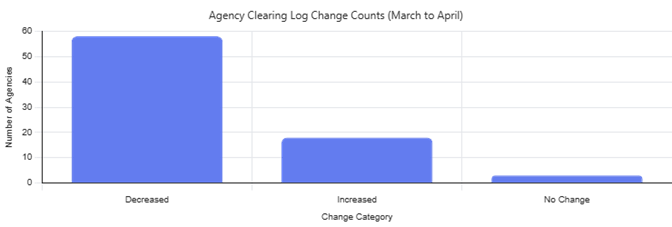
To better understand agency‑level trends across the state, we also reviewed March‑to‑April changes in Clearing Log totals for all agencies. A strong majority showed improvement:
- 58 agencies decreased their number of uncleared clients
- 18 agencies increased
- 3 agencies saw no change
The chart below shows this distribution and highlights how widespread the progress has been:
Clearing Resources:
- NEW – SSIS Data Cleanup – Strengthening our Data for What’s Next (4 minutes) – This short video provides context on why this effort matters, how improved data quality supports modernization, and what agencies can expect moving forward.
- Full Clearing Document
- Clearing FAQs
- Client Clearing (eLearning Module)
- NEW - 2026 April SSIS to CCWIS FAQ.pdf - Google Drive – developed from agency questions raised during the April Coffee Talk. This resource provides clarifications, examples, and guidance to help agencies navigate common clearing log scenarios along with additional Q&A topics covered during the Coffee Talk.
What’s Coming
- We will continue to track Clearing Log trends, monitoring progress and supporting agencies working through larger backlogs.
- In June, we will begin the Intakes Needing Action cleanup phase. More information, tools, and support materials will be shared ahead of that launch.
Thank you for your continued partnership and dedicated work towards improving SSIS data quality across Minnesota. Every resolved item strengthens our systems, prepares us for modernization, and ultimately supports better outcomes for the children, families, and communities we serve.
SSIS Data Cleanup Efforts: Clearing Log Trends & What’s Ahead
Statewide Clearing Log totals continue to trend in the right direction. The number of uncleared clients on the log for 30 days or more decreased from 29,240 in March to 25,522 in April, a reduction of 3,718 records (12.7%). This progress reflects the continued attention agencies are giving to data reconciliation and long-standing items.
To help support continued progress, the 15 agencies with the highest number of uncleared clients as of April 27 have now been contacted directly. These outreach efforts ensure agencies have the information, clarity, and support they need as we work together to strengthen statewide SSIS data quality.
To better understand agency‑level trends across the state, we also reviewed March‑to‑April changes in Clearing Log totals for all agencies. A strong majority showed improvement:
- 58 agencies decreased their number of uncleared clients
- 18 agencies increased
- 3 agencies saw no change
The chart below shows this distribution and highlights how widespread the progress has been:

Clearing Resources:
- NEW – SSIS Data Cleanup – Strengthening our Data for What’s Next (4 minutes) – This short video provides context on why this effort matters, how improved data quality supports modernization, and what agencies can expect moving forward.
- Full Clearing Document
- Clearing FAQs
- Client Clearing (eLearning Module)
- NEW - 2026 April SSIS to CCWIS FAQ.pdf - Google Drive – developed from agency questions raised during the April Coffee Talk. This resource provides clarifications, examples, and guidance to help agencies navigate common clearing log scenarios along with additional Q&A topics covered during the Coffee Talk.
What’s Coming
- We will continue to track Clearing Log trends, monitoring progress and supporting agencies working through larger backlogs.
- In June, we will begin the Intakes Needing Action cleanup phase. More information, tools, and support materials will be shared ahead of that launch.
Thank you for your continued partnership and dedicated work towards improving SSIS data quality across Minnesota. Every resolved item strengthens our systems, prepares us for modernization, and ultimately supports better outcomes for the children, families, and communities we serve.
-
SSIS Data Cleanup Effort
Share SSIS Data Cleanup Effort on Facebook Share SSIS Data Cleanup Effort on Twitter Share SSIS Data Cleanup Effort on Linkedin Email SSIS Data Cleanup Effort linkSSIS Data Cleanup Efforts: April Kickoff
Minnesota is preparing for the transition from SSIS to the state’s future CCWIS‑compliant child welfare information system. A major part of this work is early, consistent data cleanup. As this work begins, we will share early steps agencies can take to strengthen the data that will move into the new system.
Selecting the Category on the Sentiments and Feedback page labeled “Data Cleanup Efforts” will bring you to the articles that provide monthly priorities, statewide progress updates, and helpful resources.Checkout our new overview video, SSIS Data Cleanup – Strengthening Our Data for What’s Next (4 minutes), which provides a brief, high‑level look at the cleanup effort for mentors, agency staff, and others supporting this work.
Why Start Cleanup Now?
Early cleanup:
- Improves accuracy for data conversion
- Prevents backlogs during training and transition
- Supports current reporting and audit needs
- Reduces the risk of data failing to migrate
Focus: Clearing Log (Uncleared Clients)
Clearing is the first statewide priority. Uncleared clients create major conversion risks, and statewide backlogs remain high.
Agencies should:
- Resolve uncleared or mismatched clients, including “ZZ Help Desk SSIS/D” entries
- Use Reconcile when needed
- Address existing Clearing backlogs and create a plan to prevent new ones
Statewide baseline (March 2026): 29,234 uncleared clients
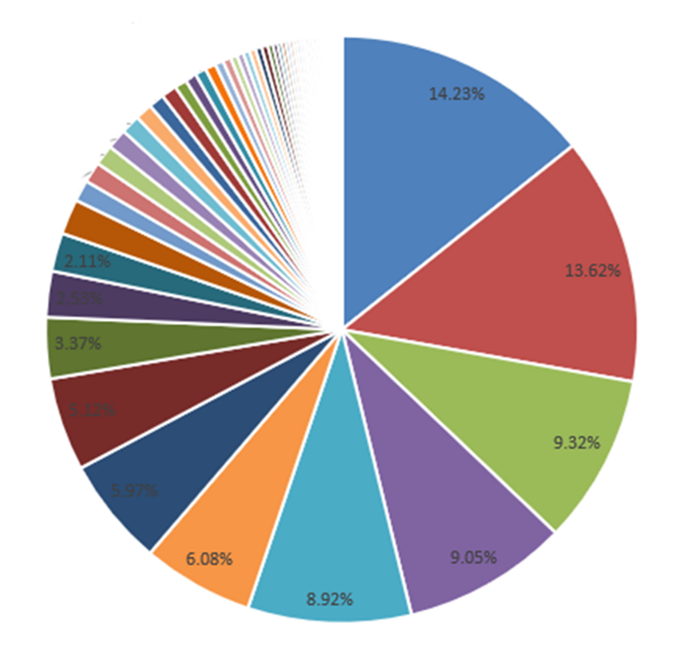
Targeted support for agencies with continued high numbers will begin in May. Below is the agency breakdown – in the future we will post agency names along with percent of improvement for each.
Clearing Resources:
- Full Clearing Document
- Clearing FAQs
- Client Clearing eLearning Module
Note: Intakes Needing Action will be the statewide cleanup focus next month.
Ongoing Support
Agencies can expect monthly cleanup guidance, direct outreach when needed, and access to job aids, Coffee Talks, training links, and documentation through the SSIS Update, Sentiment & Feedback platform, and SSIS technical meetings.
Get Started This Week
- Clear overdue clients
- Identify staff responsible for Clearing
- Set weekly or biweekly cleanup routines
- Review available Clearing resources
These early steps will help reduce future workload and support a smoother transition to the new CCWIS system.
Agencies can review the Data Cleanup Efforts Kickoff Coffee Talk from April 2026 and FAQ reference sheet from the presentation for additional information. https://mnchildwelfaretraining.com/more/ssis-training/
SSIS Data Cleanup Efforts: April Kickoff
Minnesota is preparing for the transition from SSIS to the state’s future CCWIS‑compliant child welfare information system. A major part of this work is early, consistent data cleanup. As this work begins, we will share early steps agencies can take to strengthen the data that will move into the new system.
Selecting the Category on the Sentiments and Feedback page labeled “Data Cleanup Efforts” will bring you to the articles that provide monthly priorities, statewide progress updates, and helpful resources.Checkout our new overview video, SSIS Data Cleanup – Strengthening Our Data for What’s Next (4 minutes), which provides a brief, high‑level look at the cleanup effort for mentors, agency staff, and others supporting this work.
Why Start Cleanup Now?
Early cleanup:
- Improves accuracy for data conversion
- Prevents backlogs during training and transition
- Supports current reporting and audit needs
- Reduces the risk of data failing to migrate
Focus: Clearing Log (Uncleared Clients)
Clearing is the first statewide priority. Uncleared clients create major conversion risks, and statewide backlogs remain high.
Agencies should:
- Resolve uncleared or mismatched clients, including “ZZ Help Desk SSIS/D” entries
- Use Reconcile when needed
- Address existing Clearing backlogs and create a plan to prevent new ones
Statewide baseline (March 2026): 29,234 uncleared clients
Targeted support for agencies with continued high numbers will begin in May. Below is the agency breakdown – in the future we will post agency names along with percent of improvement for each.
Clearing Resources:
- Full Clearing Document
- Clearing FAQs
- Client Clearing eLearning Module
Note: Intakes Needing Action will be the statewide cleanup focus next month.
Ongoing Support
Agencies can expect monthly cleanup guidance, direct outreach when needed, and access to job aids, Coffee Talks, training links, and documentation through the SSIS Update, Sentiment & Feedback platform, and SSIS technical meetings.
Get Started This Week
- Clear overdue clients
- Identify staff responsible for Clearing
- Set weekly or biweekly cleanup routines
- Review available Clearing resources
These early steps will help reduce future workload and support a smoother transition to the new CCWIS system.
Agencies can review the Data Cleanup Efforts Kickoff Coffee Talk from April 2026 and FAQ reference sheet from the presentation for additional information. https://mnchildwelfaretraining.com/more/ssis-training/
-
Timeline and Federal Regulations Update
Share Timeline and Federal Regulations Update on Facebook Share Timeline and Federal Regulations Update on Twitter Share Timeline and Federal Regulations Update on Linkedin Email Timeline and Federal Regulations Update linkTimeline and Federal Regulations Update
As we move forward with our upcoming procurement, we want to take a moment to share what to expect around federal review requirements and how they affect our timeline. This is meant to build shared understanding and set realistic expectations for the work ahead.
Why this matters
Because this project involves federal funding, we are required to follow a specific review and approval process with the Administration for Children and Families (ACF). These reviews are not optional, and they shape how quickly we can move from planning to contracting to implementation.
Understanding the “why” and the “when” helps all of us plan our work, communicate clearly with partners, and reduce frustration.
The Big Picture: Two Required Federal Reviews
For large procurements, ACF conducts two formal review periods, each with a minimum timeline of 60 days:
Initial ACF Review (before the Request for Proposal (RFP) is released) ACF reviews:
The Implementation Advance Planning Document (IAPD)
The RFP requirements
A sample contract
This step ensures we are asking vendors for the right things and meeting federal rules before we go to market.
Secondary ACF Review (after a vendor is selected)
ACF reviews:
The final negotiated contract
Any related or supportive service contracts
This step confirms that what we negotiated matches what was approved earlier and remains federally compliant.
Important note: If ACF requests changes at either stage (which is common), the 60-day review clock restarts after we resubmit.
What This Means for Our Timeline
Based on experience across states and large system procurements:
Re-submissions are normal, especially for complex or first-of-their-kind projects
Even in a “best-case” scenario, federal review alone can add several months
Delays are often about compliance, not performance or quality of staff work. This is part of the process, not a sign that something has gone wrong.
How This Informs Our Project Schedule
At a high level, the timeline looks like this:
Now : Planning, readiness, and RFP development
Spring/Summer 2026: RFP and IAPD submitted for initial federal review (60 days minimum)
Mid-to-Late 2026: Procurement, proposal evaluation, and vendor selection
Early 2027: Contract submitted for second federal review (60 days minimum)
2027: Design, configuration, testing, and implementation beings
This timeline assumes:
No major re-designs requested by ACF
A competitive procurement with a qualified vendor
Steady progress through negotiations
What We’re Doing to Support Success Right Now
To keep things moving as smoothly as possible, the project team is:
Engaging federal partners early and often
Building in time for questions, revisions, and re-submissions
Aligning internal teams so policy, program, legal, fiscal, and IT voices are coordinated
Your work and expertise are essential to this process and your patience is, too.
What You Can Expect Going Forward
Clear updates when we enter and exit federal review periods
Transparency when timelines shift and why
Ongoing opportunities to ask questions and surface concerns
Thank you for the work you do every day to support children, youth, and families. Large system changes take time, but they are stronger and more sustainable because of it. If you have questions or would like a deeper walk-through of any part of this process, please reach out.
Timeline and Federal Regulations Update
As we move forward with our upcoming procurement, we want to take a moment to share what to expect around federal review requirements and how they affect our timeline. This is meant to build shared understanding and set realistic expectations for the work ahead.
Why this matters
Because this project involves federal funding, we are required to follow a specific review and approval process with the Administration for Children and Families (ACF). These reviews are not optional, and they shape how quickly we can move from planning to contracting to implementation.
Understanding the “why” and the “when” helps all of us plan our work, communicate clearly with partners, and reduce frustration.
The Big Picture: Two Required Federal Reviews
For large procurements, ACF conducts two formal review periods, each with a minimum timeline of 60 days:
Initial ACF Review (before the Request for Proposal (RFP) is released) ACF reviews:
The Implementation Advance Planning Document (IAPD)
The RFP requirements
A sample contract
This step ensures we are asking vendors for the right things and meeting federal rules before we go to market.
Secondary ACF Review (after a vendor is selected)
ACF reviews:
The final negotiated contract
Any related or supportive service contracts
This step confirms that what we negotiated matches what was approved earlier and remains federally compliant.
Important note: If ACF requests changes at either stage (which is common), the 60-day review clock restarts after we resubmit.
What This Means for Our Timeline
Based on experience across states and large system procurements:
Re-submissions are normal, especially for complex or first-of-their-kind projects
Even in a “best-case” scenario, federal review alone can add several months
Delays are often about compliance, not performance or quality of staff work. This is part of the process, not a sign that something has gone wrong.
How This Informs Our Project Schedule
At a high level, the timeline looks like this:
Now : Planning, readiness, and RFP development
Spring/Summer 2026: RFP and IAPD submitted for initial federal review (60 days minimum)
Mid-to-Late 2026: Procurement, proposal evaluation, and vendor selection
Early 2027: Contract submitted for second federal review (60 days minimum)
2027: Design, configuration, testing, and implementation beings
This timeline assumes:
No major re-designs requested by ACF
A competitive procurement with a qualified vendor
Steady progress through negotiations
What We’re Doing to Support Success Right Now
To keep things moving as smoothly as possible, the project team is:
Engaging federal partners early and often
Building in time for questions, revisions, and re-submissions
Aligning internal teams so policy, program, legal, fiscal, and IT voices are coordinated
Your work and expertise are essential to this process and your patience is, too.
What You Can Expect Going Forward
Clear updates when we enter and exit federal review periods
Transparency when timelines shift and why
Ongoing opportunities to ask questions and surface concerns
Thank you for the work you do every day to support children, youth, and families. Large system changes take time, but they are stronger and more sustainable because of it. If you have questions or would like a deeper walk-through of any part of this process, please reach out.
-
Engagement Update: Comprehensive Child Welfare Information Systems
Share Engagement Update: Comprehensive Child Welfare Information Systems on Facebook Share Engagement Update: Comprehensive Child Welfare Information Systems on Twitter Share Engagement Update: Comprehensive Child Welfare Information Systems on Linkedin Email Engagement Update: Comprehensive Child Welfare Information Systems linkEngagement Across Tribal Nations and Counties
Focus Group Participation Highlights
Intake / Screening Focus Group Engagement Across Tribes and Counties
At-a-Glance Summary
Across six functional focus groups, counties participated 52 times (with several counties attending multiple functional areas), generating more than 1,245 challenges and enhancement criteria over 15 days of engagement.
Follow-up sessions included 55 participants representing 38 county participation instances, focused on clarifying and validating initial themes.
This breadth and repeat participation across intake, investigation, case management, fiscal, administration, and permanency highlights that system challenges span the full child welfare lifecycle.
Focus Group Participation
Intake/Screening: 10 counties | 250+ challenges/enhancements
Investigation/Assessment: 8 counties | 220+
Case Management: 11 counties | 225+
Administration: 6 counties | 150+
Fiscal & Title IV-E: 11 counties | 200+
State Permanency: 6 counties | 100+
Follow-Up Sessions
Intake/Screening: 18 participants | 11 counties
Investigation/Assessment: 12 participants | 10 counties
Case Management: 25 participants | 17 counties
Tribal & State Engagement
-
Prevention: 5 state staff; enhancements and challenges finalized
AICWIT: Engagement with Red Lake Nation and Leech Lake Band of Ojibwe to identify Tribal-specific system needs
This level of engagement demonstrates both the need for change and the collective will to shape it together.
Engagement Across Tribal Nations and Counties
Focus Group Participation Highlights
Intake / Screening Focus Group Engagement Across Tribes and Counties
At-a-Glance Summary
Across six functional focus groups, counties participated 52 times (with several counties attending multiple functional areas), generating more than 1,245 challenges and enhancement criteria over 15 days of engagement.
Follow-up sessions included 55 participants representing 38 county participation instances, focused on clarifying and validating initial themes.
This breadth and repeat participation across intake, investigation, case management, fiscal, administration, and permanency highlights that system challenges span the full child welfare lifecycle.
Focus Group Participation
Intake/Screening: 10 counties | 250+ challenges/enhancements
Investigation/Assessment: 8 counties | 220+
Case Management: 11 counties | 225+
Administration: 6 counties | 150+
Fiscal & Title IV-E: 11 counties | 200+
State Permanency: 6 counties | 100+
Follow-Up Sessions
Intake/Screening: 18 participants | 11 counties
Investigation/Assessment: 12 participants | 10 counties
Case Management: 25 participants | 17 counties
Tribal & State Engagement
-
Prevention: 5 state staff; enhancements and challenges finalized
AICWIT: Engagement with Red Lake Nation and Leech Lake Band of Ojibwe to identify Tribal-specific system needs
This level of engagement demonstrates both the need for change and the collective will to shape it together.
-
Next Major Milestones
Share Next Major Milestones on Facebook Share Next Major Milestones on Twitter Share Next Major Milestones on Linkedin Email Next Major Milestones link

-
Key Components for a Modernization Project
Share Key Components for a Modernization Project on Facebook Share Key Components for a Modernization Project on Twitter Share Key Components for a Modernization Project on Linkedin Email Key Components for a Modernization Project link
These steps set the foundation for a modular, CCWIS compliant system that makes work easier and supports better outcomes for families.


These steps set the foundation for a modular, CCWIS compliant system that makes work easier and supports better outcomes for families.

-
Additional Engagement Activities
Share Additional Engagement Activities on Facebook Share Additional Engagement Activities on Twitter Share Additional Engagement Activities on Linkedin Email Additional Engagement Activities linkEngagement With Counties:
- Attending all the county leadership meetings
- SSIS Partnership
- MACSSA Modernization and Children’s combined chair regular meetings
- Governance seats at decision making level
Engagement with Tribes:
- Attending AICWIT leadership meetings
- Tribal Consultation
- Planning input sessions
- Governance seat at decision making level
Other engagement:
- Attending ombudsmen meeting this fall
- Discussions with leaders in Supreme Court Council on Child Protection
- Presentations to child protection task force, Tech Advisory Council
- Hiring engagement coordinator to own engagement coordination
- Future plans for public dashboards for transparency
Engagement With Counties:
- Attending all the county leadership meetings
- SSIS Partnership
- MACSSA Modernization and Children’s combined chair regular meetings
- Governance seats at decision making level
Engagement with Tribes:
- Attending AICWIT leadership meetings
- Tribal Consultation
- Planning input sessions
- Governance seat at decision making level
Other engagement:
- Attending ombudsmen meeting this fall
- Discussions with leaders in Supreme Court Council on Child Protection
- Presentations to child protection task force, Tech Advisory Council
- Hiring engagement coordinator to own engagement coordination
- Future plans for public dashboards for transparency
-
What’s Next with Comprehensive Child Welfare Information System?
Share What’s Next with Comprehensive Child Welfare Information System? on Facebook Share What’s Next with Comprehensive Child Welfare Information System? on Twitter Share What’s Next with Comprehensive Child Welfare Information System? on Linkedin Email What’s Next with Comprehensive Child Welfare Information System? linkVendor selection for the planning phase will be completed in 2025.
Planning and partner engagement will continue through 2026.
A public project roadmap will be shared once planning begins.
Updates will be posted regularly on this page to keep partners and community members informed as the project moves forward.
The project is captured as the Child Welfare Information System, but the final name of the new system itself will be chosen later in the process.
Vendor selection for the planning phase will be completed in 2025.
Planning and partner engagement will continue through 2026.
A public project roadmap will be shared once planning begins.
Updates will be posted regularly on this page to keep partners and community members informed as the project moves forward.
The project is captured as the Child Welfare Information System, but the final name of the new system itself will be chosen later in the process.
Updates
Custom
Project Timeline
-
Finished
DCYF Comprehensive Child Welfare Information System Project has finished this stage- Planning,
- readiness,
- RFP development
This timeline assumes:
- No major re-designs requested by ACF
- A competitive procurement with a qualified vendor
- Steady progress through negotiations
-
Now - Spring/Summer 2026
DCYF Comprehensive Child Welfare Information System Project is currently at this stage- RFP and IAPD submitted for initial federal review (60 days minimum)
- Review and approval of Contract(s) by Administration for Children and Families
- Data quality cleanup and planning
- Change management readiness
-
Mid-to-Late 2026
this is an upcoming stage for DCYF Comprehensive Child Welfare Information System Project- procurement,
- proposal evaluation,
- vendor selection
-
Early 2027
this is an upcoming stage for DCYF Comprehensive Child Welfare Information System Project- Contract submitted for second federal review (60 days minimum)
-
2027
this is an upcoming stage for DCYF Comprehensive Child Welfare Information System Project- Design, configuration, testing, and implementation begins
News Categories
- #Data Cleanup Effort (4)
- #engagement (1)
- #update (1)
Who's Listening
-
Engagement Specialist
CN -
CCWIS Modernization Supervisor
CS